
Standard Kitchen Counter Size Guide
Standard kitchen counter size is generally consistent because it follows cabinet standards and ergonomics: finished height is usually about 36 in (91.44 cm), and finished depth is typically 25–25.5 in (63.50–64.77 cm) over 24 in (60.96 cm) base cabinets with a 1–1.5 in (2.54–3.81 cm) front overhang. Countertop lengths are customized, but many runs are fabricated in 72–120 in (182.88–304.80 cm) sections before seams, and islands often land around 36–60 in wide (91.44–152.40 cm) and 72–120 in long (182.88–304.80 cm). For stone/quartz countertops, common thickness is 2 cm (0.79 in / 20 mm) or 3 cm (1.18 in / 30 mm), and built-up edging can create a thicker visual profile of about 1.5 in (3.81 cm).
Regular Size
36 in high and 25–25.5 in deep, thickness 0.79 in (2 cm) or 1.18 in (3 cm).
Jumbo Size
36 in high and 25–25.5 in deep, thickness 0.79 in (2 cm) or 1.18 in (3 cm).
Super Size
36 in high and 25–25.5 in deep, thickness 0.79 in (2 cm) or 1.18 in (3 cm).
Super Jumbo
36 in high and 25–25.5 in deep, thickness 0.79 in (2 cm) or 1.18 in (3 cm).
Mini Slab
36 in high and 25–25.5 in deep, thickness 0.79 in (2 cm) or 1.18 in (3 cm).
Kitchen Counter Standard Measurements
When planning kitchen counter standard measurements, it is essential to consider project dimensions, desired aesthetic, budget constraints, fabricator’s expertise, and specific design requirements.
The standard height for kitchen counters is typically 36 inches, which accommodates most users comfortably, while the depth usually ranges from 24 to 25 inches. If the kitchen layout allows, an island can be slightly higher, around 42 inches, for bar seating.
Aesthetic preferences play a crucial role; for instance, a modern kitchen may favor sleek, minimalist designs with clean lines, while a rustic kitchen might incorporate thicker, more textured materials. Budget constraints can significantly influence material choices, with options ranging from laminate at $10 to $50 per square foot to high-end granite or quartz, which can cost $50 to $200 per square foot.
The fabricator’s expertise is vital, as intricate designs or custom cuts require skilled craftsmanship, which may increase costs but ensure quality and durability.
Specific design requirements, such as incorporating integrated sinks or cooktops, may necessitate adjustments in standard measurements, ensuring that the final product not only meets functional needs but also aligns with the overall vision for the kitchen space.
Kitchen Counter Standards: Jumbo Upsides
Standard measurements for kitchen counters offer numerous advantages that enhance both functionality and aesthetics in kitchen design.
Firstly, adhering to standard heights, typically around 36 inches, ensures comfort for most users during meal preparation and cooking, reducing strain on the back and arms.
Additionally, standard depths of 24 inches provide ample workspace while allowing for easy access to items stored in cabinets and drawers.
This uniformity also simplifies the planning and installation process, as manufacturers produce countertops, cabinets, and appliances that fit these dimensions, leading to cost savings and reduced lead times.
Furthermore, standard measurements facilitate better ergonomics, allowing for a more efficient workflow in the kitchen, which is crucial for both amateur cooks and professional chefs alike.
By following these guidelines, homeowners can create a cohesive look that enhances the overall value of their property, as potential buyers often appreciate the practicality and appeal of a well-designed kitchen.
In summary, kitchen counter standards not only promote efficiency and comfort but also contribute to a more organized and visually pleasing space.
Kitchen Counter Standards: General Waste Margin
Kitchen counter standards play a crucial role in ensuring efficiency and functionality in both residential and commercial kitchens. A general waste margin of approximately 10-15% is recommended when designing kitchen counters to accommodate the inevitable waste generated during food preparation. This margin allows for the disposal of scraps, peels, and other organic materials without cluttering the workspace.
In practical terms, if a kitchen counter measures 10 feet in length, allocating a waste margin means planning for about 1 to 1.5 feet of space dedicated to waste management solutions, such as bins or composting areas.
Additionally, the height of kitchen counters should ideally be between 36 to 42 inches, depending on the primary users, to ensure comfort while working. Proper placement of waste disposal units, ideally within arm’s reach, can further enhance workflow efficiency, minimizing the need to move away from the preparation area.
Overall, adhering to these standards not only promotes a cleaner workspace but also contributes to a more organized and productive kitchen environment.
Kitchen Counter Standards: Biggest Format Options
When considering kitchen counter standards, one of the most significant aspects is the size and format options available. The standard height for kitchen countertops is typically around 36 inches, which is designed to accommodate the average user comfortably while preparing food. However, variations exist, particularly for specialized tasks or user needs. For instance, a bar height counter may reach 42 inches, providing a more casual dining experience.
In terms of width, standard countertops usually range from 24 to 30 inches deep. This depth allows for ample workspace while ensuring that the counter does not protrude excessively into the kitchen area. For larger kitchens, some homeowners opt for deeper counters, extending up to 36 inches, which can provide additional surface area for cooking and entertaining.
Length is another critical factor, with standard countertop sections typically measuring 8 to 12 feet long. However, custom options can extend beyond this range, accommodating unique kitchen layouts or specific design preferences. For example, an L-shaped or U-shaped kitchen may require longer sections to ensure continuity and functionality.
Material choice also plays a vital role in kitchen counter standards. Common materials include granite, quartz, and laminate, each offering different aesthetics and durability levels. Granite, for instance, is favored for its natural beauty and resilience, while quartz provides a non-porous surface that is easier to maintain.
Additionally, the thickness of countertops can vary, with standard thicknesses ranging from 1.5 to 3 inches. Thicker countertops can create a more substantial appearance and may be necessary for certain materials to ensure structural integrity.
Ultimately, understanding kitchen counter standards and the various format options available is essential for creating a functional and aesthetically pleasing kitchen space. By considering height, width, length, material, and thickness, homeowners can make informed decisions that enhance both the usability and style of their kitchens.
Kitchen Counter Standards: Thickness for Heavy Use
When selecting a kitchen counter for heavy use, the thickness of the material plays a crucial role in its durability and functionality. Typically, countertops designed for heavy-duty applications range from 1.5 inches to 3 inches in thickness. Thicker countertops not only provide a more robust surface for daily tasks but also enhance the overall aesthetic appeal of the kitchen. For instance, a 2-inch thick granite countertop can withstand significant weight and pressure, making it ideal for heavy cooking and food preparation.
In addition to granite, other materials such as quartz and solid surface countertops also benefit from increased thickness. Quartz countertops, often available in thicknesses of 1.2 inches to 2 inches, offer excellent resistance to scratches and stains, making them suitable for busy kitchens. Solid surface materials, while typically thinner, can be reinforced to achieve greater durability.
Moreover, the thickness of the countertop can influence the installation process. Thicker countertops may require additional support structures, such as brackets or reinforced cabinetry, to ensure stability. For example, a 3-inch thick countertop may necessitate a more robust base to prevent sagging over time. This consideration is essential for maintaining the integrity of the countertop, especially in high-traffic areas where heavy pots and pans are frequently placed.
Ultimately, when choosing a kitchen counter for heavy use, it is vital to consider both the thickness and the material. A well-chosen countertop not only enhances the kitchen’s functionality but also contributes to its overall design. Investing in a thicker, high-quality countertop can lead to long-term satisfaction and performance, making it a worthwhile decision for any serious home cook.
Typical kitchen counter measurements for walls & decorative surfaces
Typical kitchen counter measurements influence wall and decorative surfaces because backsplashes, side returns, and feature panels are usually aligned to the counter run and cabinet geometry for a cohesive result.
Many kitchens use planning benchmarks like a counter height around 900 mm and depth around 600 mm (typical examples), which helps define where wall cladding starts and how far it should extend upward.
Backsplash designs can range from short splashes (for example, around 100–200 mm) to full-height panels reaching cabinetry or ceiling, depending on cleaning needs and style preference.
For example, a full-height slab backsplash behind the hob can reduce seams and grout lines in a high-splash zone, while joints can be aligned to cabinet edges for a cleaner look.
Accurate measurement also includes appliance clearances, socket placement, and corner sealant lines so the decorative wall finishes neatly without awkward small cuts.
Typical kitchen counter measurements for stairs
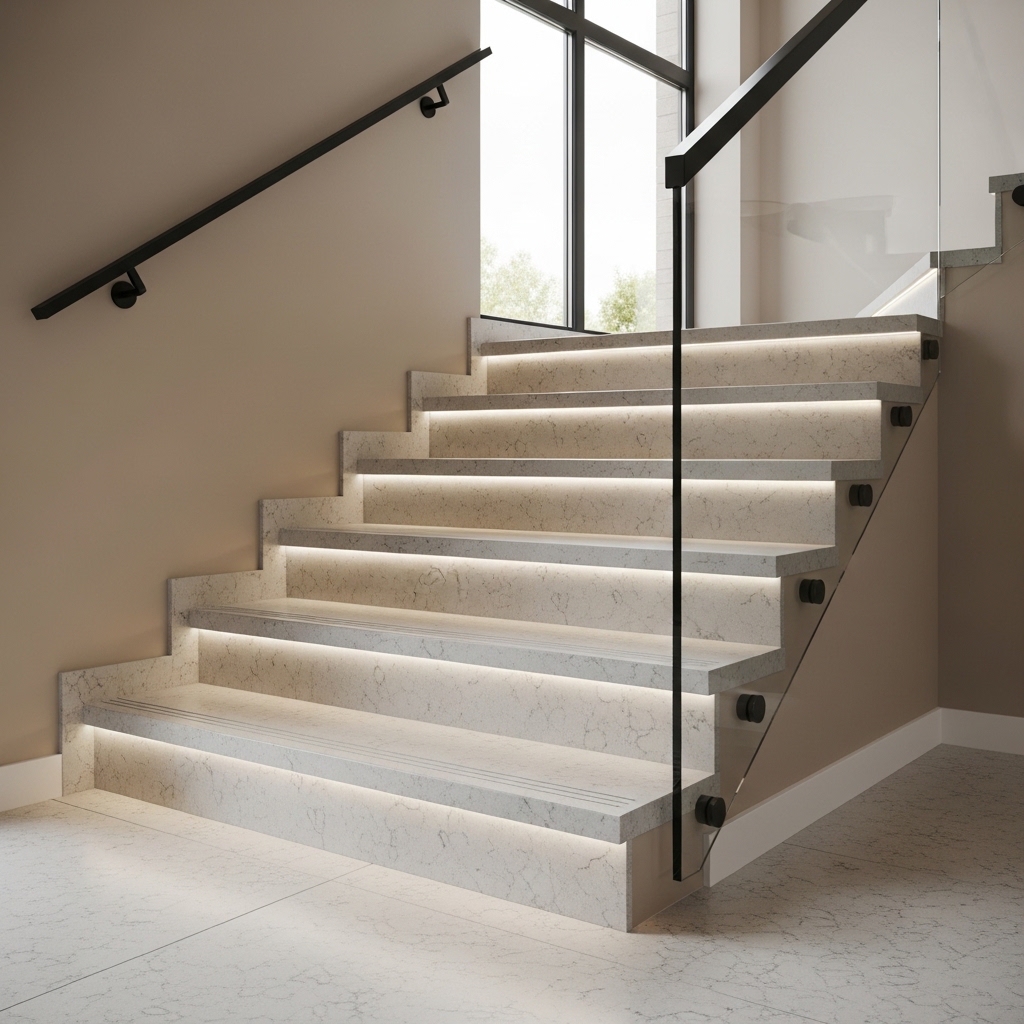
Typical kitchen counter measurements can influence stair design when the same slab material is used across both zones, creating a continuous look in open-plan spaces.
Common planning benchmarks include a counter height near 900 mm and a depth near 600 mm (typical examples), and these reference lines can guide how seams and joints align visually near the stair entry.
For example, matching the kitchen edge profile to the stair tread nose helps the two areas feel part of one design system rather than separate installations.
Even if the kitchen uses thinner cladding panels on vertical faces, stair treads usually need robust thickness (often 20 mm) for wear resistance and impact durability.
Coordinating finish type and joint spacing between kitchen surfaces and stair elements helps keep the overall interior language consistent and premium.
Standard kitchen counter size in UAE interiors is widely accepted as 600–650 mm depth with heights close to 900–950 mm, providing a balance of comfort and functionality. Island counters are often wider, reaching 1000–1200 mm for seating and prep space. For bold, seamless designs, designers may explore the biggest quartz slab size available to minimize joints and enhance visual impact.
Standard Kitchen Counter Size for Black Marquina Marble Look Kitchens
Standard kitchen counter size for black Marquina marble look kitchens usually follows depths of 600–650 mm and heights of 900–950 mm, with island widths extending to 1000–1200 mm for added impact. These proportions allow dark surfaces to feel balanced rather than overpowering. Designing counters inspired by black marquina marble within these standard sizes enhances contrast, elegance, and everyday usability.
Standard Kitchen Counter Size Coordination with Raised Floor Levels
Standard kitchen counter size coordination is essential when adjusting levels around a raised floor. With counters generally designed at 900 mm height and 600 mm depth, allowances must be made for floor elevation and access panels. This coordination ensures smooth workflow, visual consistency, and long-term usability.