
Biggest Quartz Slab Size
Biggest quartz slab size depends on the manufacturer and the specific collection, but the largest “super-jumbo” quartz formats commonly referenced in the market reach about 350 cm × 200 cm (137.80 in × 78.74 in), which is chosen to reduce seams on oversized islands and large wall panels. Another very large format that’s widely seen across more brands and colors is around 330 cm × 165 cm (129.92 in × 64.96 in), still much bigger than standard slabs. Even at these biggest sizes, quartz is typically offered in 2 cm (0.79 in / 20 mm) and 3 cm (1.18 in / 30 mm) thicknesses, and select product lines may also offer thinner 12 mm (0.47 in / 1.2 cm) slabs for specific applications.
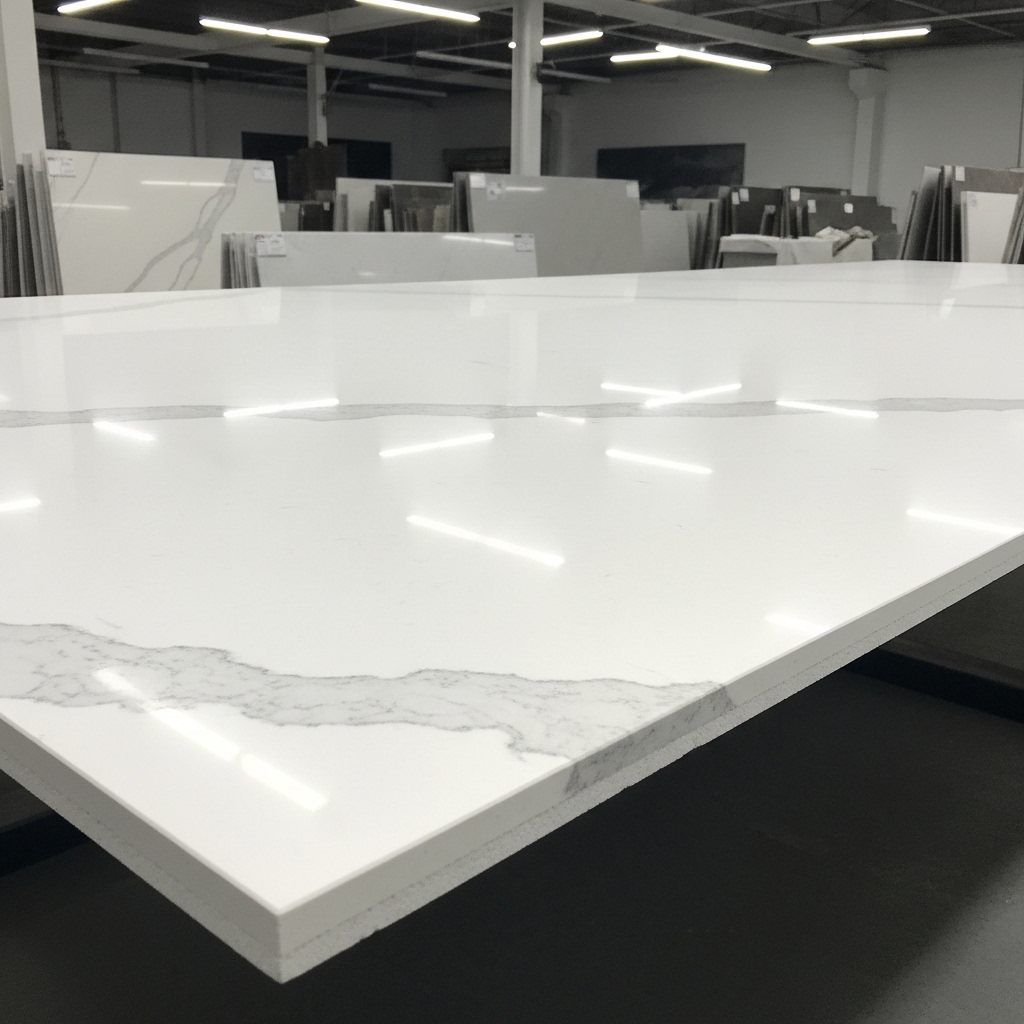
Regular Size
137.80 in × 78.74 in, thickness 0.79 in (2 cm) or 1.18 in (3 cm).
Jumbo Size
137.80 in × 78.74 in, thickness 0.79 in (2 cm) or 1.18 in (3 cm).
Super Size
137.80 in × 78.74 in, thickness 0.79 in (2 cm) or 1.18 in (3 cm).
Super Jumbo
137.80 in × 78.74 in, thickness 0.79 in (2 cm) or 1.18 in (3 cm).
Mini Slab
63 in × 126 in (largest format), thickness 0.79 in (2 cm) or 1.18 in (3 cm).
Choosing the Largest Quartz Format
When choosing the largest quartz format for your project, it is essential to consider several factors that will influence the final outcome.
First, assess the project dimensions; larger slabs, typically measuring up to 126 inches by 63 inches, can minimize seams and create a more cohesive look, making them ideal for expansive countertops or large wall applications.
Next, think about the desired aesthetic. If you aim for a sleek, modern appearance, larger formats can enhance the visual flow and reduce interruptions, while intricate patterns may benefit from smaller pieces that allow for more detailed arrangements.
Budget constraints also play a crucial role; larger slabs may come at a premium, often costing between $50 to $100 per square foot, so it’s vital to balance size with your financial plan.
Additionally, consider the fabricator’s expertise; not all fabricators are equipped to handle large formats, so ensure that your chosen professional has the necessary skills and tools to work with these materials effectively.
Finally, specific design requirements, such as the need for custom cuts or unique edge profiles, should be factored in, as these can influence both the size of the quartz you choose and the overall cost. By carefully evaluating these elements, you can select the largest quartz format that aligns with your vision and practical needs.
Largest Quartz Formats: Key Advantages
Choosing the largest quartz format for countertops and surfaces offers numerous advantages that can significantly enhance both aesthetic appeal and functionality.
One of the primary benefits is the seamless appearance that large slabs provide, minimizing the number of joints and grout lines, which not only creates a more cohesive look but also simplifies cleaning and maintenance.
For instance, a single large slab can measure up to 120 inches by 55 inches, allowing for expansive surfaces without interruptions.
Additionally, larger formats can be more cost-effective in the long run, as they reduce installation time and labor costs associated with multiple smaller pieces.
The durability of quartz is another key advantage; it is non-porous, resistant to stains, and less likely to chip or crack compared to traditional materials.
Furthermore, the versatility in design options available with large quartz formats allows homeowners and designers to achieve a wide range of styles, from sleek modern looks to more traditional aesthetics, making it an ideal choice for various applications, including kitchen countertops, bathroom vanities, and even wall cladding.
Overall, opting for the largest quartz formats not only elevates the visual appeal of a space but also offers practical benefits that enhance the longevity and usability of the surfaces.
Oversized Quartz Material: Expected Offcuts
Oversized quartz material is increasingly popular in the construction and design industries due to its durability and aesthetic appeal. When working with oversized slabs, it is essential to consider the expected offcuts, which can significantly impact both cost and material efficiency. Typically, when fabricating oversized quartz slabs, the offcut percentage can range from 15% to 25%, depending on the complexity of the design and the layout of the cuts. For instance, if a contractor is working with a 3-meter by 1.5-meter slab, they might anticipate around 0.45 to 0.75 square meters of offcuts, which can be minimized with careful planning. To optimize the use of oversized quartz, it is advisable to create a detailed cutting plan that maximizes the yield from each slab while accounting for the specific dimensions required for the project. Additionally, utilizing advanced technology such as CNC machines can enhance precision and reduce waste. By effectively managing offcuts, designers and builders can not only save on material costs but also contribute to more sustainable practices in the industry.
Oversized Quartz Material: Maximum Format
Oversized quartz material has gained significant popularity in recent years, particularly in the realm of interior design and architecture. This innovative material is characterized by its large format slabs, which can reach dimensions of up to 126 inches by 63 inches or even larger, depending on the manufacturer.
The appeal of oversized quartz lies not only in its aesthetic versatility but also in its practical benefits. With fewer seams than traditional smaller tiles, oversized slabs create a more seamless and cohesive look, enhancing the visual impact of countertops, backsplashes, and wall coverings.
Moreover, oversized quartz is engineered to be durable and resistant to scratches, stains, and heat, making it an ideal choice for high-traffic areas such as kitchens and bathrooms. The non-porous surface of quartz also means that it does not harbor bacteria or mold, contributing to a healthier living environment.
In terms of design, oversized quartz slabs offer a wide range of colors, patterns, and finishes, allowing homeowners and designers to achieve their desired aesthetic. From sleek, modern looks to more traditional styles, the versatility of oversized quartz can complement various design themes.
Additionally, the installation of oversized quartz can be more efficient than that of smaller tiles, as fewer pieces are required to cover a given area. This can lead to reduced labor costs and shorter installation times, making it a practical choice for both residential and commercial projects.
As the demand for oversized quartz continues to grow, manufacturers are innovating to produce even larger slabs, pushing the boundaries of what is possible in terms of size and design. With advancements in technology, the future of oversized quartz material looks promising, offering endless possibilities for creative expression in interior spaces.
Overall, oversized quartz material stands out as a functional and stylish option for those looking to elevate their interiors while enjoying the benefits of durability and ease of maintenance.
Oversized Quartz Material: Thickness for High Footfall
Oversized quartz material has gained significant popularity in high footfall areas due to its remarkable durability and aesthetic appeal. Thickness plays a crucial role in determining the performance of quartz surfaces in such environments. Typically, quartz slabs used in commercial spaces range from 12mm to 30mm in thickness. For high footfall areas, a thickness of at least 20mm is recommended to ensure that the surface can withstand the constant pressure and impact from heavy traffic.
The inherent strength of quartz, combined with its thickness, allows it to resist chipping, cracking, and scratching, which are common issues in busy settings like shopping malls, airports, and office lobbies. A thicker slab not only enhances the material’s structural integrity but also contributes to its overall aesthetic, providing a more substantial and luxurious appearance.
Moreover, oversized quartz surfaces can be fabricated to create expansive, seamless installations that minimize joints and grout lines, further enhancing their durability and ease of maintenance. This is particularly beneficial in high-traffic areas where cleanliness and hygiene are paramount. With a non-porous surface, oversized quartz is resistant to stains and bacteria, making it an ideal choice for environments that require frequent cleaning.
In conclusion, selecting the appropriate thickness of oversized quartz material is essential for ensuring its longevity and performance in high footfall areas. A thickness of 20mm or more not only provides the necessary strength to withstand heavy use but also enhances the visual appeal of the space, making it a preferred choice for architects and designers aiming to create functional yet stylish environments.
Extra-large quartz slab formats for walls & decorative surfaces
Extra-large quartz slab formats are used for walls when the priority is minimal seams and maximum continuous visual impact, especially in large rooms and high-end commercial interiors.
Many product ranges offer expanded sizes like 3300 × 1650 mm and some extend further (for example, around 3400 × 1700 mm as an illustrative maximum-style format), helping cover wider elevations with fewer joints.
For vertical cladding, extra-large panels are commonly specified in 6–12 mm thickness to control weight, while thicker options may be used for strong edge returns or boxed features.
For example, a tall statement wall can be planned with one dominant panel in the center and seams pushed toward side returns or aligned to architectural shadow gaps.
Because panel size increases handling risk, format planning should include site access checks, lifting method, and substrate readiness so the installation stays straight and stable over time.
Extra-large quartz slab formats for stairs
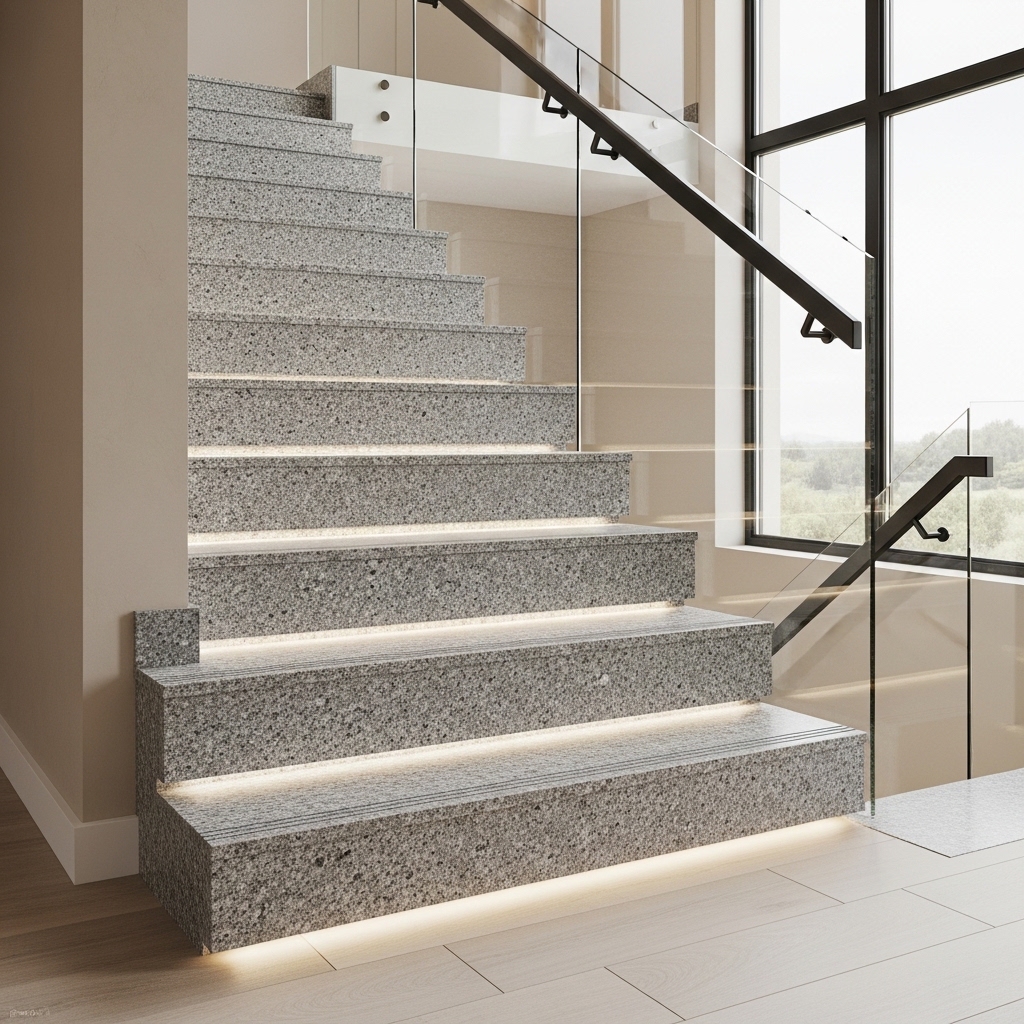
Extra-large quartz slab formats for stairs are chosen to maximize continuous surfaces on landings and reduce the number of joints on feature staircases with wide flights or prominent turning areas.
Expanded offerings can include examples like 3400 × 1700 mm (illustrative figure), providing extra cutting flexibility beyond standard and jumbo formats.
For example, a large landing may be cut as one dominant panel from an extra-large slab, removing a central seam and creating a cleaner, more luxurious turning point.
Tread thickness is often planned around 20 mm for durability, while thicker-looking noses can be achieved with edge build-ups to create a stronger architectural profile.
Because these slabs are larger and heavier, format selection should consider access routes and safe lifting so the biggest pieces can be installed accurately without damage.
In the UAE, the biggest quartz slab size available from premium manufacturers can reach approximately 3340 × 1640 mm (around 11 ft × 5.4 ft), making it ideal for expansive kitchen islands, waterfall edges, and long seamless counters. These oversized slabs significantly reduce joint lines and enhance visual continuity in luxury interiors. While these dimensions are impressive, designers still coordinate finishes with other surfaces such as marble flooring size to maintain proportional balance across floors and worktops.
Biggest Quartz Slab Size for Seamless Tiles Installation Planning
The biggest quartz slab size used for seamless tiles installation planning can reach approximately 3340 × 1640 mm in premium collections, making it ideal for large-format floors and wall surfaces with minimal joints. These oversized slabs reduce grout lines, improve visual continuity, and speed up installation on wide areas. Using large slabs effectively supports efficient tiles installation, especially in commercial spaces and modern residential projects where clean lines are essential.
Biggest Quartz Slab Size for Raised Floor Coverage
The biggest quartz slab size is ideal for achieving wide, seamless coverage in large areas built over a raised floor. Extra-large quartz slabs can reach dimensions of approximately 3300 × 1650 mm with a standard thickness of 20 mm, significantly reducing joint lines. This is especially beneficial for data centers, offices, and premium commercial interiors where raised floor systems require both strength and clean aesthetics.