
Standard Size of Kitchen Slab
Standard size of a kitchen slab (kitchen countertop standard sizing) is based on typical cabinet modules and ergonomic height: the most common finished kitchen slab depth is 25–25.5 in (63.50–64.77 cm) to cover 24 in (60.96 cm) base cabinets with a front overhang of about 1–1.5 in (2.54–3.81 cm), and the standard finished counter height is about 36 in (91.44 cm) from the floor. Kitchen slabs are cut to suit the layout, but common single-piece straight sections often fall around 72–120 in long (182.88–304.80 cm) before seams are introduced for longer walls, while island slabs frequently range about 36–60 in wide (91.44–152.40 cm) and 72–120 in long (182.88–304.80 cm). For stone/quartz kitchen slabs, typical thicknesses are 2 cm (0.79 in / 20 mm) and 3 cm (1.18 in / 30 mm), and thicker-looking edges are often built up to appear about 1.5 in (3.81 cm) without using a full 1.5 in slab.
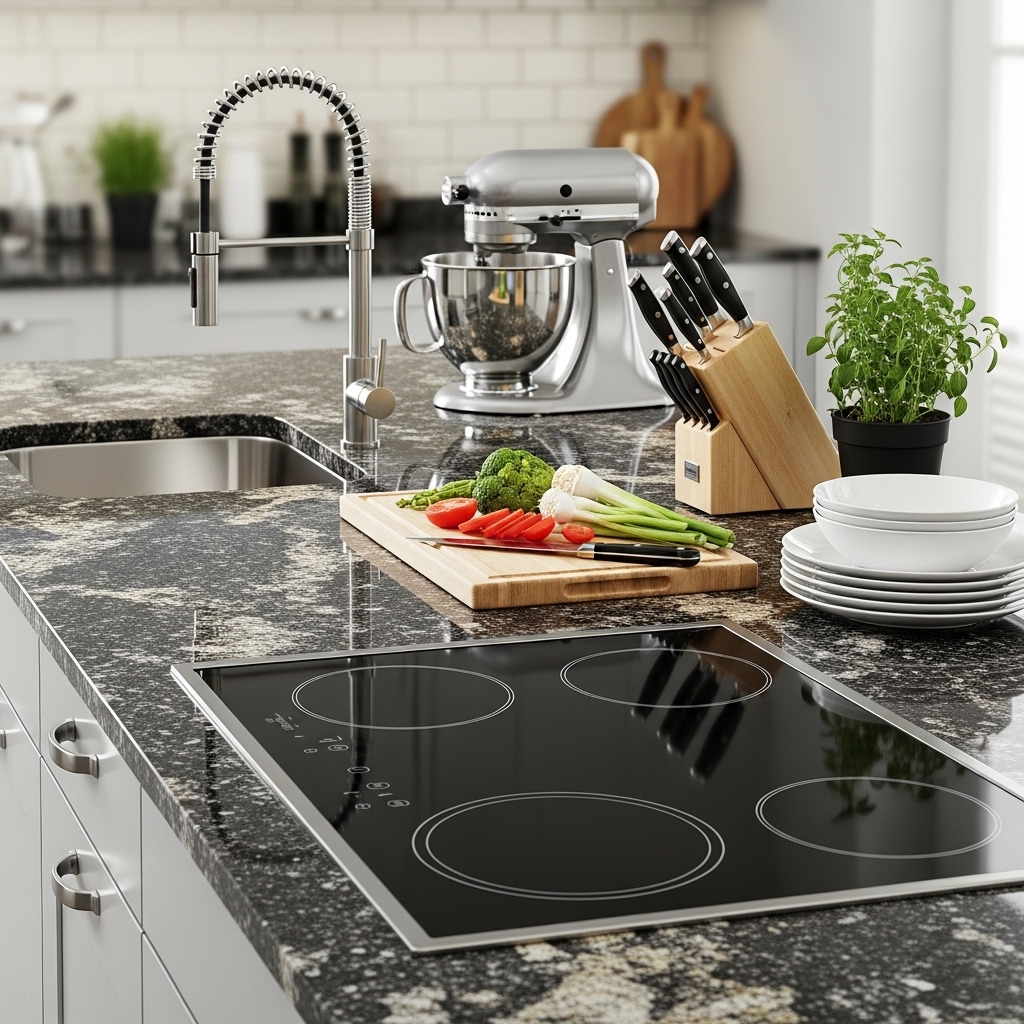
Regular Size
25–25.5 in deep and commonly 96–120 in long per section, thickness 0.79 in (2 cm) or 1.18 in (3 cm).
Jumbo Size
25–25.5 in deep and commonly 120–144 in long per section, thickness 0.79 in (2 cm) or 1.18 in (3 cm).
Super Size
25–25.5 in deep and commonly 144–168 in long per section, thickness 0.79 in (2 cm) or 1.18 in (3 cm).
Super Jumbo
25–25.5 in deep and commonly 168–180 in long per section, thickness 0.79 in (2 cm) or 1.18 in (3 cm).
Mini Slab
25–25.5 in deep and commonly 60–72 in long per section, thickness 0.79 in (2 cm) or 1.18 in (3 cm).
A Guide to Standard Kitchen Worktop Dimensions
When planning a kitchen renovation, understanding standard kitchen worktop dimensions is crucial for achieving both functionality and aesthetic appeal.
The typical height for kitchen worktops ranges from 86 to 92 cm, accommodating most users comfortably while allowing for efficient food preparation.
In terms of depth, standard worktops are usually 60 cm, providing ample space for appliances and cooking activities.
However, the desired aesthetic can significantly influence these dimensions; for instance, a minimalist design may favor thinner worktops of around 2 cm, while a more robust, traditional look might call for thicker options of 3 to 4 cm.
Budget constraints also play a vital role in determining the choice of materials and dimensions. High-end materials like granite or quartz can cost between $50 to $200 per square foot, while laminate options may only range from $10 to $40 per square foot, allowing for more flexibility in size and design.
Additionally, the fabricator’s expertise is essential; a skilled fabricator can create custom dimensions that fit unique spaces or specific design requirements, such as incorporating integrated sinks or overhangs for seating.
Ultimately, balancing these factors—project dimensions, desired aesthetic, budget constraints, fabricator’s expertise, and specific design requirements—will lead to a well-planned kitchen worktop that enhances both functionality and style.
Standard Kitchen Worktop Sizing: Upgrade Benefits
A Guide to Standard Kitchen Worktop Dimensions offers numerous advantages for homeowners and designers alike.
Firstly, adhering to standard sizing, typically around 600mm in depth and 900mm in height, ensures that worktops are ergonomically designed for comfort and efficiency, reducing strain during meal preparation.
This standardization also simplifies the planning process, allowing for easier integration of appliances and cabinetry, which often follow similar dimensions.
Moreover, using standard sizes can lead to cost savings, as manufacturers produce these dimensions in bulk, resulting in lower prices and a wider selection of materials and finishes.
For instance, a standard laminate worktop might cost around £100 per linear meter, while custom sizes can significantly increase expenses.
Additionally, a well-planned kitchen with standard worktop dimensions can enhance the overall aesthetic appeal, creating a cohesive look that is both functional and visually pleasing.
Ultimately, understanding and utilizing standard kitchen worktop sizing not only streamlines the design process but also contributes to a more enjoyable cooking experience.
Standard Kitchen Worktops: Practical Waste Factor
Standard kitchen worktops are essential components of any kitchen design, providing both functionality and aesthetic appeal. When selecting worktops, it is crucial to consider the practical waste factor, which refers to the amount of material that may be lost during the fabrication and installation process. Typically, this waste factor can range from 5% to 15%, depending on the type of material chosen and the complexity of the kitchen layout. For instance, when working with natural stone like granite or quartz, the waste factor may be on the higher end due to the need for precise cuts and the potential for cracks or imperfections in the stone.
Additionally, the choice of worktop material can significantly impact the overall kitchen budget. Laminate worktops, for example, are often more cost-effective, with prices ranging from £20 to £100 per linear meter, while solid wood or stone options can range from £100 to over £300 per linear meter.
It is advisable to consult with a professional to accurately estimate the required amount of material, taking into account the waste factor, to ensure that the project stays within budget and that the final installation meets both functional and design expectations. Proper planning and consideration of the waste factor can lead to a more efficient use of resources and a stunning kitchen that stands the test of time.
Standard Kitchen Worktops: Biggest Option
Standard kitchen worktops are a crucial element in any kitchen design, serving both functional and aesthetic purposes. One of the most popular materials for worktops is laminate, which offers a wide range of colors and patterns, making it an affordable choice for homeowners. Laminate worktops typically cost between £20 to £100 per linear meter, depending on the quality and design.
Another widely used material is granite, known for its durability and natural beauty. Granite worktops can range from £100 to £400 per linear meter, depending on the type and finish. This natural stone is not only heat-resistant but also adds significant value to a home.
Quartz worktops have gained popularity due to their non-porous nature and low maintenance requirements. Priced between £100 and £300 per linear meter, quartz offers a sleek, modern look while being resistant to stains and scratches.
Wooden worktops provide a warm, inviting feel to kitchens and can be found in various types, such as oak, maple, or bamboo. The cost for wooden worktops typically ranges from £50 to £200 per linear meter, depending on the wood type and finish. However, they do require regular maintenance to prevent damage from moisture and heat.
Stainless steel worktops are favored in professional kitchens for their hygienic properties and durability. While they can be more expensive, ranging from £150 to £500 per linear meter, they are resistant to heat and easy to clean, making them a practical choice for busy households.
In conclusion, the choice of kitchen worktop material significantly impacts both the functionality and aesthetic appeal of the space. With a variety of options available, ranging from budget-friendly laminate to luxurious granite, homeowners can select a worktop that best suits their needs and style preferences.
Standard Kitchen Worktops: High-Traffic Thickness
Standard kitchen worktops are essential components of any kitchen design, serving both functional and aesthetic purposes. When considering high-traffic areas in the kitchen, the thickness of the worktop becomes a crucial factor. Typically, standard kitchen worktops come in thicknesses ranging from 20mm to 40mm.
A thicker worktop, such as a 30mm or 40mm option, provides enhanced durability and resistance to wear and tear, making it ideal for high-traffic environments where heavy use is expected.
In busy kitchens, where food preparation and cooking occur frequently, a thicker worktop can withstand the impact of heavy pots, pans, and kitchen appliances without easily denting or scratching. For instance, a 40mm thick granite worktop can handle significant weight and pressure, ensuring longevity and maintaining its appearance over time.
Additionally, thicker worktops often provide better thermal resistance, which is particularly beneficial in areas where hot cookware may be placed directly on the surface.
Moreover, the aesthetic appeal of thicker worktops cannot be overlooked. A 30mm or 40mm worktop creates a more substantial visual presence in the kitchen, contributing to a sense of quality and luxury. This thickness can also enhance the overall design, allowing for more intricate edge profiles and finishes that can elevate the kitchen’s style.
In conclusion, when selecting standard kitchen worktops for high-traffic areas, opting for a thicker option not only ensures durability and functionality but also enhances the kitchen’s visual appeal. Investing in a thicker worktop can lead to long-term satisfaction and performance, making it a wise choice for any busy kitchen environment.
Standard kitchen slab measurement guide for walls & decorative surfaces
A standard kitchen slab measurement guide for walls focuses on using widely available slab formats and practical panel cuts to achieve a clean backsplash or feature wall without excessive seams.
Most designs prioritize keeping joints away from high-visibility zones (behind the hob, above the sink) and aligning seams to cabinet edges or corners where they blend into the overall kitchen geometry.
Wall-friendly thicknesses like 6–12 mm are often chosen to reduce load, while thicker 20 mm pieces may be used for waterfall ends or areas where the edge profile is part of the visual design.
For example, a full-height backsplash can be laid out as one main panel plus narrow returns, ensuring the primary visible surface reads as one continuous decorative finish.
Accurate measurement also accounts for socket cut-outs, window reveals, and tolerances so the slab fits cleanly and stays easy to maintain.
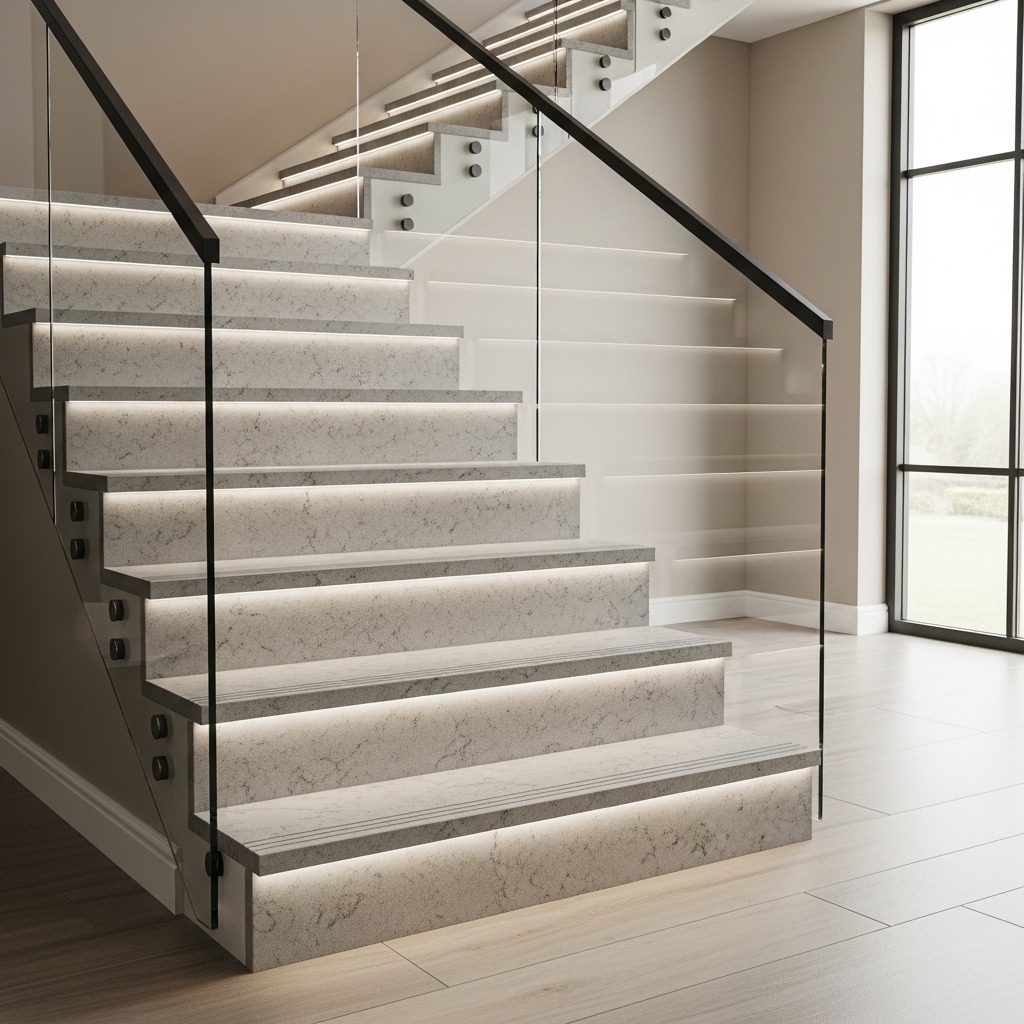
Standard kitchen slab measurement guide for stairs
A standard kitchen slab measurement guide for stairs focuses on using widely available slab formats and a repeatable cut plan so treads, risers, and landings look uniform and are easy to fabricate.
Standard slab examples such as 3000 × 1400 mm and 3200 × 1600 mm provide predictable coverage and help maintain shade consistency when all stair components come from the same batch.
For example, treads can be nested as repeated cuts in one orientation, while risers are cut from calmer pattern zones so the staircase looks clean and balanced.
Stair treads typically require robust thickness (often 20 mm), and a small chamfer or eased edge is commonly specified to protect the step nose.
The guide also includes seam placement strategy—keeping joints away from the center of landings and aligning them to side returns for a more premium, less interrupted finish.
In the UAE, the standard size of kitchen slab is usually planned around everyday usability and appliance integration, with counter depths of 600–650 mm, island widths of 900–1200 mm, and finished heights near 900–950 mm including the stone. These measurements suit most residential kitchens while allowing clean seam placement and efficient material usage. During layout planning, fabricators carefully match these dimensions with the countertop slab size to minimize joints and wastage.
Standard Size of Kitchen Slab Planning with Self Leveling Preparation
Standard size of kitchen slab planning with self leveling preparation usually begins with common kitchen dimensions such as 600–650 mm counter depth, island widths of 900–1200 mm, and finished heights around 900–950 mm. These measurements ensure comfort, appliance clearance, and efficient slab utilization. Before installation, applying self leveling compounds is critical to achieve a flat substrate, especially when using large-format slabs, as it prevents lippage, cracking, and long-term alignment issues.
Standard Size of Kitchen Slab Planning for Raised Floors
Standard size of kitchen slab planning becomes critical when interiors are designed around a raised floor system, as floor build-up directly affects finished heights. In most projects, kitchen slabs are planned at depths of 600–650 mm with a finished counter height of 900–950 mm. Allowing for the raised floor structure below ensures proper ergonomics, smooth transitions, and unobstructed access to underfloor services.