
Standard Stone Slab Size
Standard stone slab size (natural stone such as granite, marble, or quartzite) is usually expressed as a typical range because quarry output varies, but many stone slabs commonly fall around 108–120 in long × 60–72 in wide (274.32–304.80 cm × 152.40–182.88 cm). In some bundles, wider slabs reach about 78 in (198.12 cm) and lengths can go to about 126 in (320.04 cm), while smaller half-slabs are often around 96 in × 48 in (243.84 cm × 121.92 cm) for compact projects. Standard stone slab thickness is typically 2 cm (0.79 in / 20 mm) or 3 cm (1.18 in / 30 mm), with 1.5 cm (0.59 in / 15 mm) sometimes supplied for vertical panels and lighter applications.
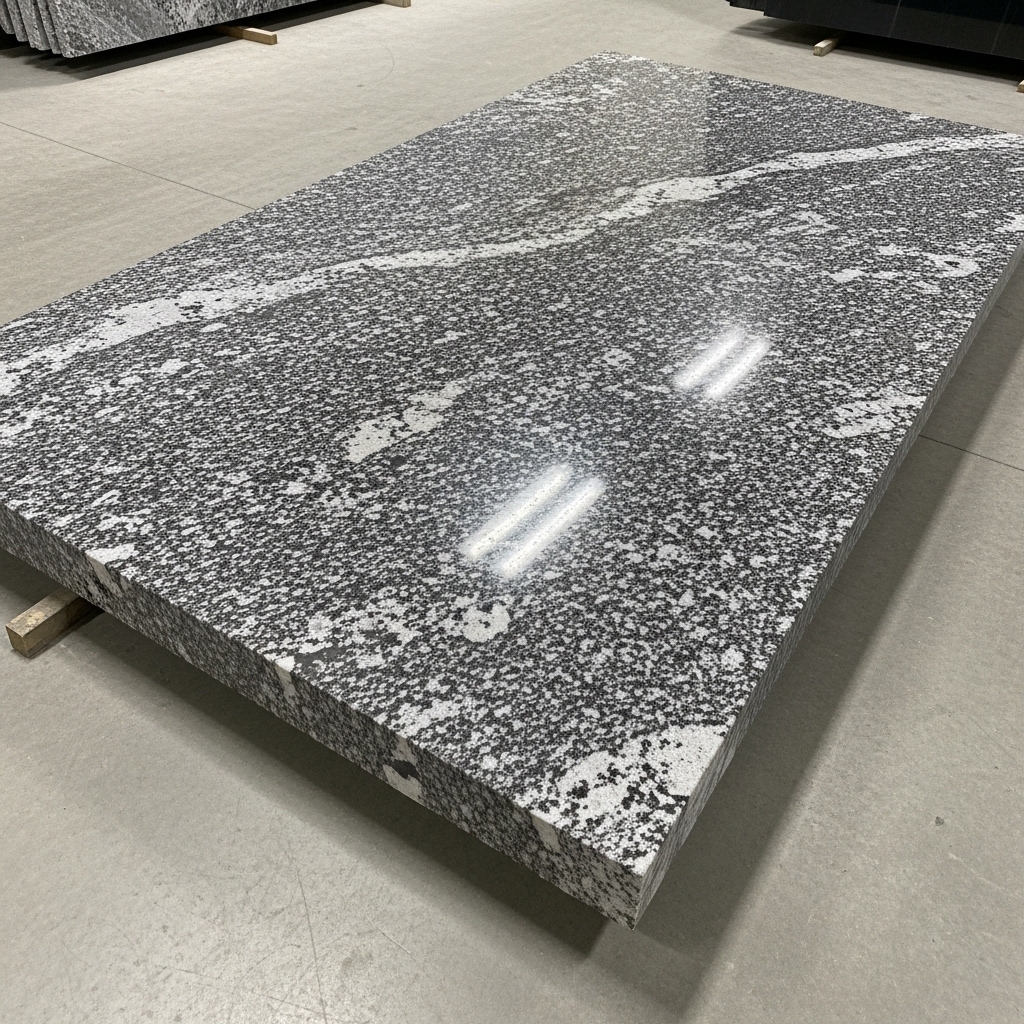
Regular Size
120 in × 72 in (common range), thickness 0.79 in (2 cm) or 1.18 in (3 cm).
Jumbo Size
126 in × 78 in, thickness 0.79 in (2 cm) or 1.18 in (3 cm).
Super Size
138 in × 78 in, thickness 0.79 in (2 cm) or 1.18 in (3 cm).
Super Jumbo
138 in × 78 in, thickness 0.79 in (2 cm) or 1.18 in (3 cm).
Mini Slab
96 in × 48 in, thickness 0.79 in (2 cm) or 1.18 in (3 cm).
Standard Stone Sheet Dimensions Guide
When selecting standard stone sheet dimensions for a project, it is essential to consider various factors that influence the final outcome.
Project dimensions play a crucial role, as they dictate the size and layout of the stone sheets needed. For instance, a kitchen countertop may require larger sheets, typically around 3 cm thick and 120 cm wide, to minimize seams and create a seamless appearance.
The desired aesthetic also significantly impacts the choice of dimensions; for a modern look, larger, uniform sheets may be preferred, while a more traditional style might benefit from smaller, varied sizes.
Budget constraints are another critical aspect, as larger sheets can be more expensive due to material costs and potential waste. It is advisable to balance the desired size with the budget, ensuring that the project remains financially viable.
Additionally, the fabricator’s expertise should not be overlooked; some fabricators may specialize in specific dimensions or types of stone, which can affect the availability and cost of materials.
Lastly, specific design requirements, such as intricate patterns or custom cuts, may necessitate adjustments in standard dimensions to achieve the desired look. For example, if a project requires a unique edge profile, the dimensions may need to be tailored accordingly, potentially increasing both time and cost. By carefully considering these factors, one can select the most suitable stone sheet dimensions that align with the overall vision for the project.
Standard Stone Sheet Formats: Why Upsize
Standard stone sheet dimensions provide numerous advantages in the construction and design industries.
Firstly, they ensure consistency and uniformity across projects, which simplifies the planning and installation processes. For instance, using standard sizes like 1200mm x 2400mm allows for easier calculations and reduces waste, as materials can be cut and fitted more efficiently.
Additionally, these dimensions facilitate better compatibility with various tools and machinery, enhancing productivity on-site.
Upsizing stone sheets can also lead to significant cost savings; larger sheets reduce the number of joints required, which not only minimizes labor costs but also creates a more seamless aesthetic.
Furthermore, standard formats can improve inventory management, as suppliers can stock a limited range of sizes that meet the majority of market needs, streamlining logistics and reducing lead times.
Overall, adopting standard stone sheet dimensions enhances efficiency, reduces costs, and promotes a higher quality of workmanship in construction projects.
Standard Stone Materials: Typical Waste Allowance
Standard stone materials, commonly used in construction and landscaping, typically have a waste allowance that accounts for the natural imperfections and variations in the stone. This waste allowance is crucial for ensuring that projects remain within budget and that the final aesthetic meets expectations. Generally, a waste allowance of about 10% to 15% is recommended for standard stone materials, depending on the type of stone and the specific application. For instance, when ordering 100 square feet of flagstone, a contractor might order an additional 10 to 15 square feet to accommodate for cuts, breakage, and other losses during installation. In cases where intricate patterns or custom cuts are involved, the waste allowance may increase to 20% or more. It is essential for project managers to communicate with suppliers about the expected waste allowance to ensure that the right amount of material is ordered, thus minimizing excess costs and delays. Additionally, proper planning and careful handling during installation can further reduce waste, allowing for more efficient use of resources and contributing to sustainable building practices.
Standard Stone Materials: Largest Format
Standard stone materials in the context of large format tiles have gained significant traction in the construction and design industries. These materials, often made from natural stones such as granite, marble, and quartzite, are celebrated for their durability and aesthetic appeal. Large format tiles typically measure 24 inches by 48 inches or larger, allowing for fewer grout lines and a more seamless appearance. This not only enhances the visual appeal of spaces but also simplifies maintenance, as there are fewer joints where dirt and grime can accumulate. The production of large format stone tiles involves advanced technology that ensures precision cutting and finishing. For instance, water jet cutting technology allows for intricate designs and shapes, while maintaining the integrity of the stone. Thickness can vary, with options ranging from 10mm to 20mm, depending on the intended use, whether for flooring, wall cladding, or countertops. The weight of these tiles can also be considerable; a single large format tile can weigh upwards of 100 pounds, necessitating careful handling and installation techniques. In terms of applications, large format stone materials are versatile and can be used in both residential and commercial settings. They are particularly popular in high-end residential projects, luxury hotels, and upscale retail spaces. For example, using large format marble tiles in a bathroom can create a spa-like atmosphere, while large granite slabs in a kitchen can serve as stunning countertops that are both functional and visually striking. Moreover, the trend towards open-concept living spaces has further fueled the demand for large format stone materials. With fewer interruptions in flooring and wall surfaces, these materials help create a cohesive look that enhances the overall flow of a space. In terms of sustainability, many manufacturers are now focusing on sourcing stones responsibly and utilizing eco-friendly practices in their production processes, which is increasingly important to environmentally conscious consumers. Overall, the rise of standard stone materials in large formats reflects a broader trend towards luxury, durability, and design flexibility in modern architecture and interior design. As technology continues to advance, the possibilities for innovative uses of these materials will likely expand, offering even more options for designers and homeowners alike.
Standard Stone Materials: Floor-Grade Thickness
#ERROR!
Standard stone slab measurement guide for walls & decorative surfaces
A standard stone slab measurement guide for walls helps compare common stone categories (engineered stone, granite, marble, quartzite) and choose practical panel sizes for safe installation.
Many stone slabs are supplied in large sheets and then cut into wall panels sized for transport and site access, keeping seams controlled and aligned to architectural lines.
Wall-friendly thickness is often selected to manage weight—engineered stone frequently uses 6–12 mm panels, while many natural stones are commonly specified around 10–20 mm depending on fixing method.
For example, a decorative elevation may be planned as large vertical panels to reduce joints, with seams placed on corners or shadow gaps so the wall reads clean and intentional.
Good measurement practice also includes checking substrate flatness, specifying consistent joint widths, and planning edge finishes (arrised, chamfered) for a refined final appearance.
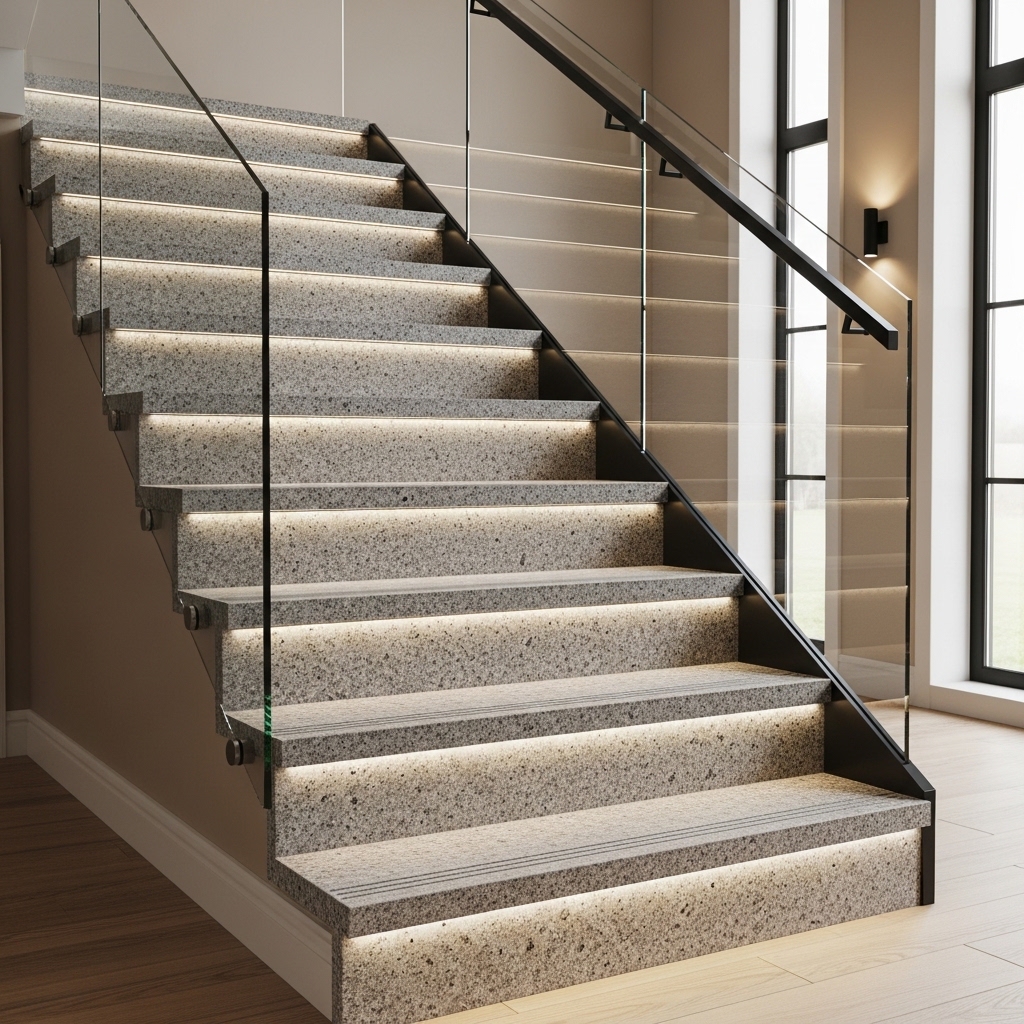
Standard stone slab measurement guide for stairs
A standard stone slab measurement guide for stairs provides a practical framework for converting large slabs—whether quartz, granite, marble, or quartzite—into consistent tread, riser, and landing components.
The process starts with accurate stair geometry, then prioritizes seam placement so joints avoid focal zones such as the center of landings or the main walking line on wide steps.
Thickness is selected for performance: many stair treads use robust thickness around 20 mm (or thicker depending on stone and design), while cladding panels on sides may be lighter where suitable to manage load.
For example, a landing is often planned as one dominant panel when possible, while treads are cut as repeats to keep the staircase visually uniform.
Standard guidance also includes edge detailing, uniform joint gaps, and pattern direction control so the finished stair reads straight, durable, and professionally fabricated.
Within the UAE stone industry, standard stone slab size is a general benchmark used for estimating seams, transport, and handling, often centered around slabs close to 3000 mm long and 1500 mm wide. This reference helps designers decide whether a layout can be achieved with standard inventory or requires oversized material. During granite selection, clients frequently ask what is the size of a granite slab to confirm suitability.
Standard Stone Slab Size for Door Threshold Marble Works
Standard stone slab size for door threshold marble works usually falls within the 2800–3200 mm length range, enabling fabricators to cut both large surfaces and narrow transition strips from one slab. Thicknesses of 20 mm or 30 mm are commonly used to match adjacent flooring levels. A well-sized door threshold marble produced from standard slabs ensures durability and a clean, finished doorway appearance.
Standard Stone Slab Size for Raised Floor Systems
Standard stone slab size selection supports consistency in interiors built around a raised floor system. Stone slabs commonly measure around 3000 × 1500 mm, providing adequate coverage while remaining manageable during installation. These dimensions help ensure alignment with floor panels and stable performance over time.