
What Is the Size of a Granite Slab?
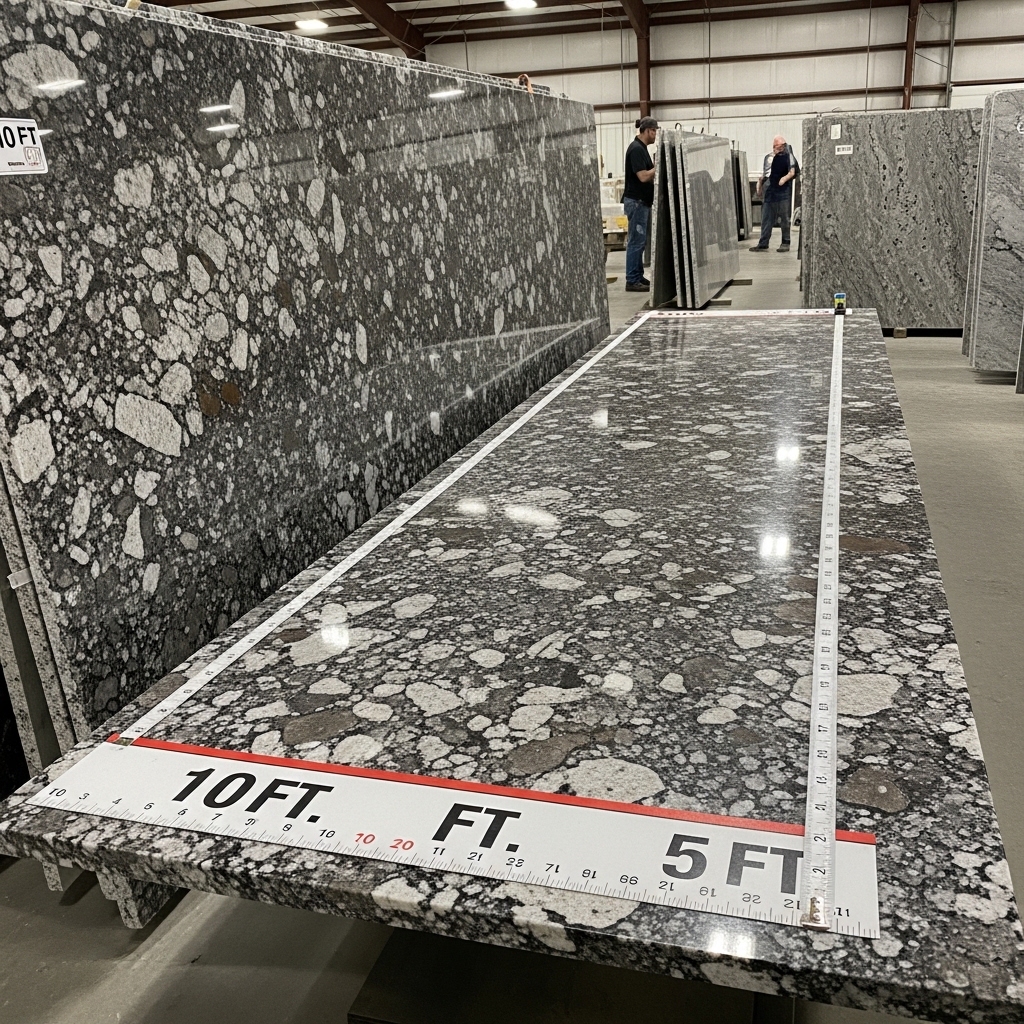
What is the size of a granite slab is usually answered as a range because granite comes from different quarries and is bundled in varying dimensions, but a very common countertop slab range is about 108–120 in long × 60–72 in wide (274.32–304.80 cm × 152.40–182.88 cm). Many suppliers also offer larger slabs around 126 in × 78 in (320.04 cm × 198.12 cm) when available, and smaller half-slabs can be about 96 in × 48 in (243.84 cm × 121.92 cm) for smaller kitchens or vanities. Granite thickness is most commonly 2 cm (0.79 in / 20 mm) and 3 cm (1.18 in / 30 mm), with 1.5 cm (0.59 in / 15 mm) sometimes used for wall cladding or lighter installations.
Regular Size
108–120 in × 60–72 in, thickness 0.79 in (2 cm) or 1.18 in (3 cm).
Jumbo Size
126 in × 78 in, thickness 0.79 in (2 cm) or 1.18 in (3 cm).
Super Size
138 in × 78 in, thickness 0.79 in (2 cm) or 1.18 in (3 cm).
Super Jumbo
138 in × 78 in, thickness 0.79 in (2 cm) or 1.18 in (3 cm).
Mini Slab
96 in × 48 in, thickness 0.79 in (2 cm) or 1.18 in (3 cm).
Understanding Granite Slab Measurements
Understanding granite slab measurements is crucial for achieving the desired outcome in any project.
First, consider the project dimensions; accurate measurements ensure that the granite fits perfectly in the designated space, whether it’s a countertop, backsplash, or flooring. For instance, a standard kitchen countertop typically measures around 25-26 inches in depth and 1.25 inches in thickness, while larger islands may require slabs that are 3-4 inches thick for added durability.
Next, the desired aesthetic plays a significant role in selecting the right granite. Different colors, patterns, and finishes can dramatically alter the look of a space; for example, a polished finish can enhance the vibrancy of a deep blue granite, while a honed finish may provide a more subdued, matte appearance.
Budget constraints are another critical factor; granite prices can range from $40 to $200 per square foot, depending on the rarity of the stone and the complexity of the installation. It’s essential to balance quality with cost, ensuring that the chosen slab meets both aesthetic and financial expectations.
Additionally, the fabricator’s expertise should not be overlooked. Experienced fabricators can provide valuable insights into the best practices for cutting and installing granite, which can affect both the longevity and appearance of the finished product.
Lastly, specific design requirements, such as edge profiles or integrated sinks, may necessitate additional considerations in measurements and material selection. For example, a waterfall edge may require a continuous slab that extends down the sides of an island, potentially increasing the overall material needed. By carefully evaluating these factors, one can ensure a successful granite installation that meets both functional and aesthetic goals.
Granite Slab Measurements: Jumbo Benefits
Understanding granite slab measurements is crucial for both homeowners and professionals in the construction and design industries. Accurate measurements ensure that the granite fits perfectly in the intended space, minimizing waste and reducing costs. For instance, a standard granite slab typically measures 120 inches by 55 inches, but jumbo slabs can reach up to 130 inches by 75 inches, providing more surface area for larger projects. This extra size can be particularly beneficial in creating expansive countertops or large-format tiles, allowing for fewer seams and a more cohesive look. Additionally, knowing the thickness of the slab, which usually ranges from 2 cm to 3 cm, helps in determining the structural integrity and suitability for various applications. By understanding these measurements, one can also better plan for installation, ensuring that the cabinetry and supports are adequately prepared to handle the weight of the granite, which can be around 10 to 12 pounds per square foot. Ultimately, a thorough grasp of granite slab measurements not only enhances aesthetic appeal but also contributes to the longevity and functionality of the installation.
Granite Slab Material: General Waste Estimate
Granite slab material is widely used in construction and design due to its durability and aesthetic appeal. When estimating general waste for granite slabs, it is essential to consider factors such as cutting, shaping, and installation processes. Typically, the waste generated during these processes can range from 5% to 20% of the total material used, depending on the complexity of the project and the skill of the fabricators. For instance, if a project requires 100 square feet of granite slabs, one might expect to waste between 5 to 20 square feet due to off-cuts and imperfections.
Additionally, proper planning and precise measurements can significantly reduce waste. Utilizing advanced cutting techniques and optimizing the layout of the slabs can help minimize the amount of material discarded. It is advisable to consult with experienced professionals who can provide insights into best practices for waste management in granite slab projects.
Ultimately, understanding the general waste estimate not only aids in budgeting but also promotes sustainability by encouraging the efficient use of resources.
Granite Slab Material: Largest Format Explained
Granite slab material has gained immense popularity in the construction and design industries, particularly for countertops, flooring, and wall cladding. One of the most significant advantages of granite slabs is their large format. These slabs can be produced in sizes that exceed 10 feet in length and 5 feet in width, allowing for fewer seams and a more cohesive look in any application.
The seamless appearance not only enhances the aesthetic appeal but also simplifies maintenance, as there are fewer grout lines to clean and maintain over time.
Moreover, the durability of granite is unmatched; it is resistant to scratches, heat, and stains, making it an ideal choice for high-traffic areas. Granite slabs typically have a thickness of 2 cm or 3 cm, providing substantial strength and stability. This thickness allows for a variety of edge profiles, which can be customized to suit individual preferences.
The natural beauty of granite, with its unique patterns and colors, adds a touch of elegance to any space.
In terms of installation, the large format of granite slabs can significantly reduce labor costs and time. Fewer pieces mean less cutting and fitting, which streamlines the installation process. For instance, a single slab can cover an entire kitchen island, eliminating the need for multiple smaller pieces that require careful alignment.
Additionally, the weight of granite slabs necessitates professional installation, ensuring that the material is handled correctly and securely.
Overall, the use of large format granite slabs in design and construction not only enhances the visual appeal of a space but also offers practical benefits in terms of durability and maintenance. As the demand for high-quality materials continues to rise, granite slabs remain a top choice for homeowners and designers alike.
Granite Slab Material: Thickness for Heavy Footfall
Granite slabs are a popular choice for flooring in high-traffic areas due to their durability and aesthetic appeal. When considering granite for heavy footfall, the thickness of the slab plays a crucial role in its performance and longevity. Typically, granite slabs come in various thicknesses, with the most common being 2 cm (approximately 0.79 inches) and 3 cm (approximately 1.18 inches). For areas that experience significant foot traffic, such as commercial spaces, shopping malls, or busy residential hallways, a thickness of 3 cm is often recommended. This added thickness not only enhances the slab’s strength but also provides better resistance to cracking and chipping, which can occur under the weight of heavy loads and constant movement.
Moreover, the installation of thicker granite slabs can contribute to a more stable and solid feel underfoot, which is particularly important in environments where comfort and safety are paramount. The weight of a 3 cm granite slab can be substantial, averaging around 15 to 20 pounds per square foot, making it essential to ensure that the underlying structure can support this load.
In addition to thickness, the quality of the granite itself is vital. Higher-grade granite, which is less porous and more resistant to stains and scratches, is ideal for areas with heavy foot traffic. This quality ensures that the surface remains visually appealing and functional over time, even in the face of daily wear and tear.
Furthermore, proper sealing and maintenance of granite slabs can significantly extend their lifespan, especially in high-traffic areas. Regular sealing helps to protect the stone from moisture and stains, which can compromise its integrity.
In conclusion, when selecting granite slabs for heavy footfall areas, opting for a thickness of 3 cm is advisable to ensure durability and performance. Coupled with high-quality material and proper maintenance, granite flooring can provide a long-lasting and elegant solution for both residential and commercial spaces.
Granite slab sizing guide for walls & decorative surfaces
A granite slab sizing guide for walls focuses on choosing the largest practical panels for visual impact while keeping pieces safe to handle and easy to align on-site.
Many designs start with the wall’s “hero area” and aim to keep seams out of that zone, pushing joints toward edges, corners, or within architectural breaks like niches and reveals.
Granite slabs often arrive in variable ranges, so panel sizing is usually based on the best usable sections of the slab rather than forcing a fixed module that wastes premium pattern zones.
For example, if a wall has a central focal point, the layout can reserve the most consistent color field for the center and place seams where trim lines or lighting channels naturally divide the elevation.
A strong sizing guide also accounts for thickness choice, anchoring approach, and tolerances so panels sit flush with consistent joints and minimal visual stepping.
Granite slab sizing guide for stairs
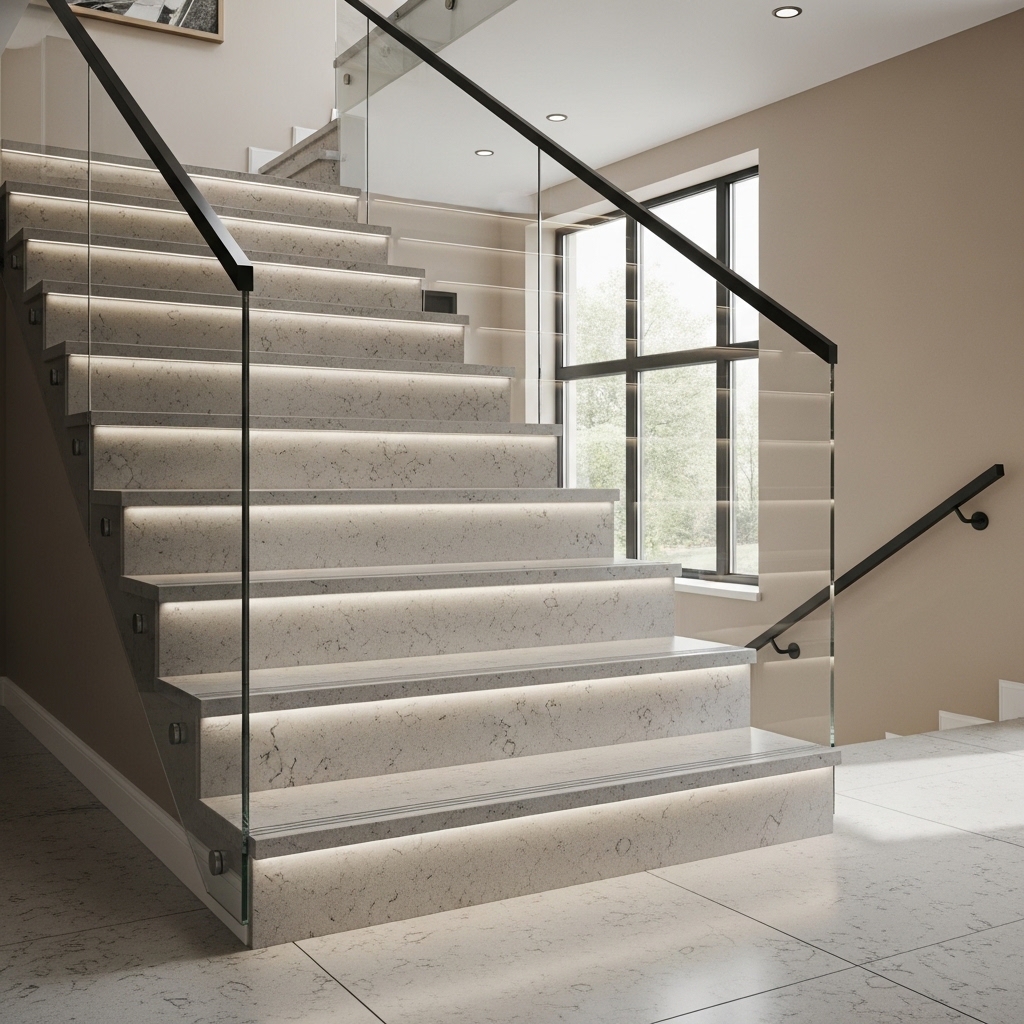
A granite slab sizing guide for stairs is primarily about choosing slab areas and panel sizes that reduce seams in the most visible zones while keeping pieces safe to handle and install.
Start by identifying focal points—entry view, landings, turning steps—then plan to keep those surfaces as continuous as possible by using the largest practical pieces and pushing joints to perimeter edges.
Granite slabs often come in broad ranges like 2400–3300 mm by 1400–2000 mm (typical examples), and selecting larger slabs can improve yield for landings and wide tread runs.
For example, a turning landing can be planned as one dominant panel from a larger slab section, while tread pieces are nested around it in a consistent direction for a cohesive look.
Sizing also includes deciding on tread thickness (commonly 20–30 mm) and edge profile, because those details affect both durability and the perceived mass of the staircase.
When homeowners in the UAE ask what is the size of a granite slab, suppliers usually explain that most slabs fall between 2800–3200 mm in length and 1500–1800 mm in width, with some variation by color and quarry. These dimensions support common kitchen layouts and islands when planned correctly. For finishing details like doorways and transitions, fabricators also consider threshold size requirements cut from the same material.
What Is the Size of a Granite Slab for Tile Fixing Rates in Dubai Planning
When asking what is the size of a granite slab for tile fixing rates in Dubai planning, most suppliers cite slabs measuring roughly 2800–3200 mm by 1500–1800 mm. These dimensions influence how many tiles or panels can be cut from a single slab and how much labor is required. Since tile fixing rates in dubai are often calculated per square meter, understanding slab size helps estimate costs more accurately and reduce material waste.
What Is the Size of a Granite Slab for Raised Floor Design
When evaluating what is the size of a granite slab for effective raised floor design, most suppliers offer slabs between 2800 and 3200 mm in length. This size range allows designers to fabricate counters, borders, and panels that integrate smoothly with access flooring and service zones.