
Stone Chips Size Chart
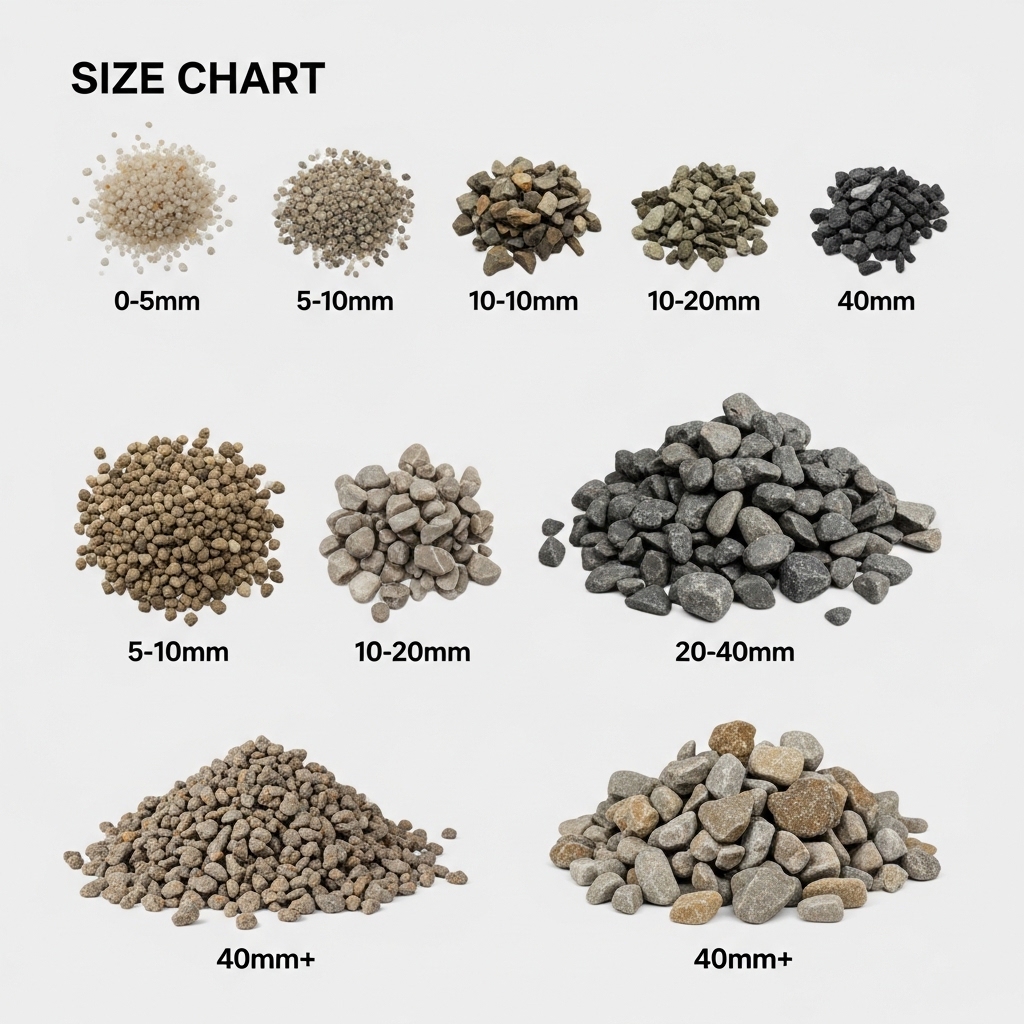
Stone chips size chart (typical decorative stone chips/aggregate gradations) is usually given by nominal chip size, which also roughly matches the chip “thickness” because chips are 3D pieces rather than flat sheets. Common bands include fine chips at 3–6 mm (0.3–0.6 cm / 0.12–0.24 in), medium chips at 6–12 mm (0.6–1.2 cm / 0.24–0.47 in), large chips at 12–20 mm (1.2–2.0 cm / 0.47–0.79 in), and extra-large chips at 20–40 mm (2.0–4.0 cm / 0.79–1.57 in). If you need a “thickness” figure for specification, it is typically close to the nominal chip size (for example, 6–12 mm chips are commonly about 6–12 mm thick, i.e., 0.24–0.47 in), though actual pieces can vary because chips are irregular.
Regular Size
0.12–0.24 in (fine), 0.24–0.47 in (medium), 0.47–0.79 in (large), 0.79–1.57 in (extra-large) chip size (thickness roughly similar).
Jumbo Size
0.47–0.79 in (large) and 0.79–1.57 in (extra-large) chip size (thickness roughly similar).
Super Size
0.79–1.57 in (extra-large) chip size (thickness roughly similar).
Super Jumbo
0.79–1.57 in (extra-large) chip size (thickness roughly similar).
Mini Slab
0.12–0.24 in (fine) and 0.24–0.47 in (medium) chip size (thickness roughly similar).
Choosing the Correct Stone Chip Grading
Choosing the correct stone chip grading is crucial for achieving the desired outcome in any project.
First, consider the project dimensions; larger areas may benefit from coarser stone chips, such as 3/8 inch or 1/2 inch, which can provide better coverage and stability, while smaller projects may require finer grades, like 1/4 inch, to ensure a smooth finish.
The desired aesthetic also plays a significant role; for a rustic look, a mix of various sizes can create depth, whereas a sleek, modern design might call for uniform, finer grades.
Budget constraints are another critical factor; coarser stones may be less expensive per ton, but finer grades often require more material to achieve the same visual impact, potentially increasing costs.
Additionally, the fabricator’s expertise should not be overlooked; some may specialize in certain grades or finishes, which can influence the final product’s quality and appearance.
Lastly, specific design requirements, such as slip resistance or color matching, may dictate the choice of stone chip grading, with certain grades offering better performance in these areas. For instance, if a project requires a slip-resistant surface, opting for a coarser grade may be beneficial, while a project focused on color uniformity might necessitate a finer grade.
Stone Chip Grading: Benefits of Larger Sizes
Choosing the correct stone chip grading is crucial for various construction and landscaping projects, as it significantly impacts both aesthetic appeal and structural integrity.
One of the primary advantages of opting for larger stone chip sizes, such as 20mm or 40mm, is their enhanced drainage capabilities. Larger chips create more void spaces, allowing water to flow through more efficiently, which is particularly beneficial in areas prone to heavy rainfall or flooding.
Additionally, larger stone chips tend to be more durable and less susceptible to compaction, making them ideal for high-traffic areas such as driveways and parking lots. This durability can lead to lower maintenance costs over time, as larger stones are less likely to break down or require frequent replacement.
Furthermore, the visual impact of larger stone chips can be striking, providing a more natural and rugged appearance that can enhance the overall landscape design. For instance, using 40mm stone chips in a garden pathway can create a more dramatic effect compared to smaller sizes, which may appear less substantial.
In summary, selecting the appropriate stone chip grading, particularly larger sizes, offers numerous benefits including improved drainage, increased durability, reduced maintenance costs, and enhanced aesthetic appeal, making it a wise choice for both functional and decorative applications.
Stone Chip Waste & Spillage Allowance Guide
Stone chip waste and spillage allowance is an essential consideration in construction and landscaping projects, as it directly impacts material costs and project efficiency.
Typically, stone chips are used for various applications, including driveways, pathways, and decorative features. However, during transportation and installation, a certain percentage of these materials may be lost due to spillage or waste. It is generally accepted that a waste allowance of around 5% to 10% should be factored into the total quantity of stone chips ordered.
For instance, if a project requires 1,000 kg of stone chips, it would be prudent to order an additional 50 to 100 kg to account for potential waste. This allowance not only ensures that there is enough material to complete the project but also helps in maintaining the aesthetic and functional integrity of the installation.
Furthermore, proper handling and storage practices can significantly reduce spillage. Using tarps or containers during transport and ensuring that the installation area is well-prepared can minimize losses.
In summary, understanding and applying a stone chip waste and spillage allowance is crucial for effective project management, cost control, and achieving the desired outcome in any stone chip application.
Stone Chip Grades: Largest Size Category
Stone chip grades are categorized based on the size of the stones, with the largest size category typically encompassing stones that range from 19 mm to 25 mm in diameter.
These larger stone chips are often used in applications where durability and structural integrity are paramount, such as in the construction of roads, driveways, and foundations.
The larger size allows for better load distribution and can withstand heavier traffic, making them ideal for high-traffic areas.
In terms of composition, these larger stone chips are usually made from hard, durable materials like granite or basalt, which provide excellent resistance to weathering and erosion.
For instance, granite stone chips are known for their strength and longevity, often lasting for decades without significant degradation.
The use of larger stone chips can also enhance drainage capabilities, as the increased space between the stones allows for better water flow, reducing the risk of flooding and water accumulation.
Moreover, the aesthetic appeal of larger stone chips cannot be overlooked.
They can add a natural, rugged look to landscaping projects, driveways, and pathways, making them a popular choice among homeowners and landscape designers.
The color variations found in larger stone chips, ranging from grays to earthy tones, can complement various architectural styles and enhance the overall visual appeal of outdoor spaces.
In summary, the largest size category of stone chips plays a crucial role in both functional and aesthetic applications.
Their durability, load-bearing capacity, and visual appeal make them a preferred choice in many construction and landscaping projects.
Stone Chips: Thickness Notes for Heavy-Use Areas
Stone chips are a crucial component in the construction and maintenance of heavy-use areas, such as driveways, parking lots, and industrial sites. The thickness of the stone chip layer plays a significant role in determining the durability and performance of these surfaces. For heavy-use areas, a minimum thickness of 4 to 6 inches is generally recommended to ensure adequate load-bearing capacity and to prevent deformation under heavy traffic.
The selection of stone chips should also consider the type of traffic expected in the area. For instance, areas that will experience frequent heavy truck traffic may require a thicker layer, potentially up to 8 inches, to withstand the increased stress. Additionally, the size and type of stone chips can influence the overall stability of the surface. Larger chips provide better interlocking and load distribution, while smaller chips can fill voids and create a more compact surface.
Proper installation techniques are essential to achieve the desired thickness and performance. The base should be well-prepared, compacted, and graded to ensure proper drainage and prevent settling. After laying the stone chips, it is advisable to compact the surface to enhance stability and reduce the risk of shifting under load. Regular maintenance, including periodic re-compaction and replenishment of stone chips, is also necessary to maintain the integrity of the surface over time.
In summary, the thickness of stone chips in heavy-use areas is a critical factor that directly impacts the longevity and functionality of the surface. Adhering to recommended thickness guidelines, selecting appropriate materials, and employing proper installation and maintenance practices will ensure that these areas remain safe and functional for years to come.
Stone chip grading guide for walls & decorative surfaces
A stone chip grading guide for walls and decorative surfaces focuses on how crushed stone or decorative aggregate is classified by particle size ranges and how those grades affect texture, appearance, and performance in different surface applications.
Grading is often described using sieves or size bands (for example, chips in the 3–6 mm range vs. 6–12 mm range as illustrative figures), and the chosen grade influences whether the finish looks fine and uniform or bold and highly textured.
For decorative wall renders, terrazzo-style surfaces, or exposed aggregate finishes, smaller grades typically create a smoother, denser look, while larger grades produce a more pronounced, tactile character that stands out in feature zones.
As an example, a fine chip grade can be used for sleek modern wall panels where you want subtle texture and easier cleaning, while a coarser grade might suit outdoor decorative surfaces where slip resistance and rugged visual depth are priorities.
To achieve consistency, suppliers often recommend using a uniform grading mix and maintaining proper binder-to-chip ratios so the final decorative surface has even distribution, stable bonding, and a balanced visual pattern across the wall.
Stone chip grading guide for stairs
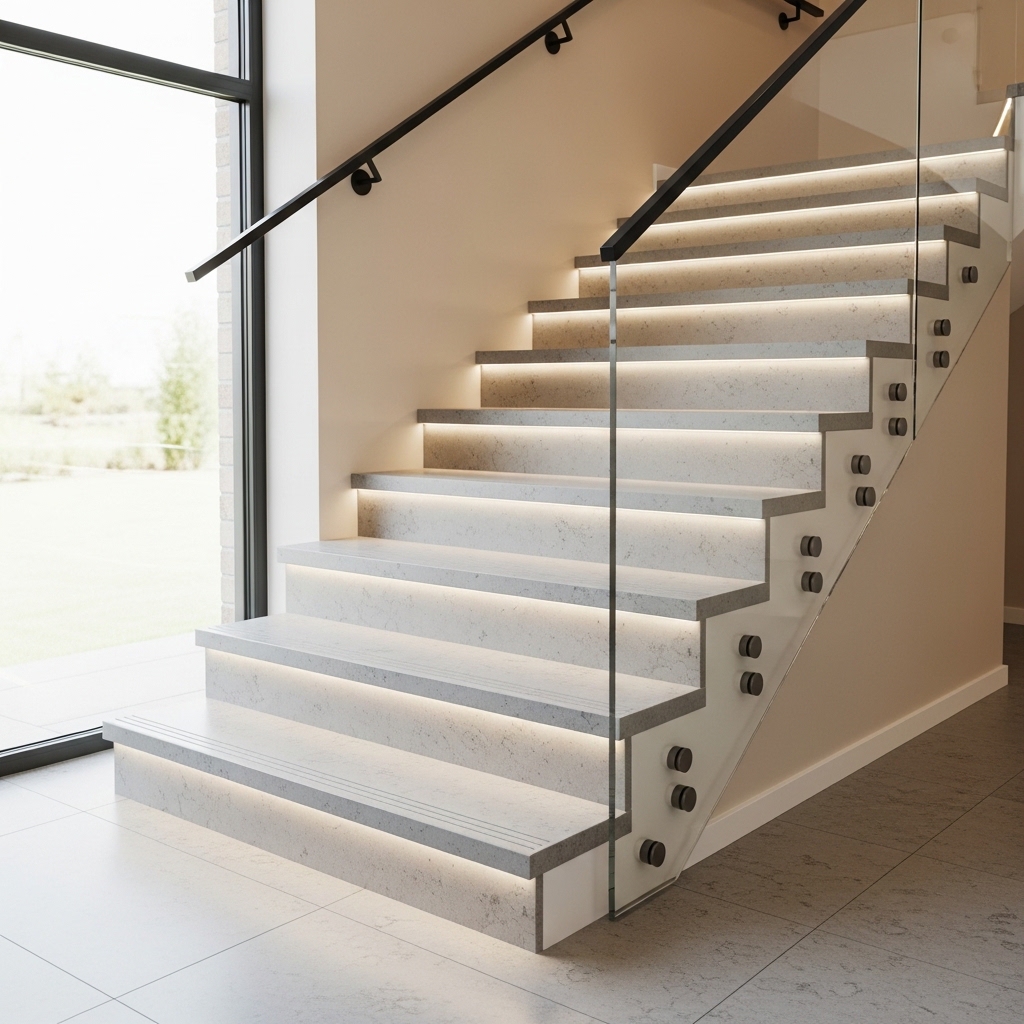
A stone chip grading guide for stairs focuses on how decorative aggregate sizes are classified and how those grades affect texture, grip, and visual appearance in stair-adjacent finishes like terrazzo-style treads or exposed-aggregate nosing bands.
Grading is often described by size bands (for example, 3–6 mm chips versus 6–12 mm chips as illustrative figures), and the grade chosen influences whether the finished surface feels finer and smoother or bolder and more textured.
For example, smaller chips can create a denser, more uniform look that is easier to clean, while larger chips can add strong visual depth and may improve perceived grip depending on binder and finishing method.
In stair contexts, consistent grading helps achieve even traction and a predictable appearance from step to step, which is important because variation becomes very noticeable across repeated treads.
A well-planned guide also considers binder selection, finishing method, and edge detailing so the final stair surface remains durable and visually consistent in high-traffic conditions.
A stone chips size chart used in the UAE typically categorizes aggregates by millimeter ranges—such as fine (2–4 mm), medium (5–10 mm), and coarse (10–20 mm)—to help specify finishes for terrazzo, landscaping, or decorative concrete. These charts ensure visual consistency and performance across large areas. When such finishes are paired with countertops, suppliers often align them with the standard slab size quartz used elsewhere in the project for cohesive design.
Stone Chips Size Chart Guide for Travertine Stone Finishes
A stone chips size chart guide for travertine stone finishes typically categorizes aggregates into fine (2–4 mm), medium (5–10 mm), and coarse (10–20 mm) ranges, depending on the desired texture and visual depth. These charts help maintain consistency across decorative surfaces and flooring. When working with travertine stone, selecting the correct chip size ensures the finish complements the natural pores and tonal variation of the material.
Stone Chips Size Chart for Raised Floor Aggregates
A stone chips size chart is often referenced when preparing aggregates and infill materials used alongside a raised floor. Common chip sizes range from 6–10 mm and 10–20 mm, depending on compaction and load requirements. Correct sizing helps achieve stable bedding, proper drainage, and uniform support beneath raised floor panels.