
What is the Size of a Slab of Granite?
The size of a slab of granite is usually given as a typical supplier range because granite comes in varying bundle dimensions: common countertop slabs are about 108–120 in long × 60–72 in wide (274.32–304.80 cm × 152.40–182.88 cm). Many suppliers also stock larger slabs around 126 in × 78 in (320.04 cm × 198.12 cm) when available, and smaller half-slabs can be about 96 in × 48 in (243.84 cm × 121.92 cm) for smaller kitchens or vanity projects. Granite slab thickness is most commonly 2 cm (0.79 in / 20 mm) or 3 cm (1.18 in / 30 mm), with 1.5 cm (0.59 in / 15 mm) sometimes used for wall cladding or lighter installations.
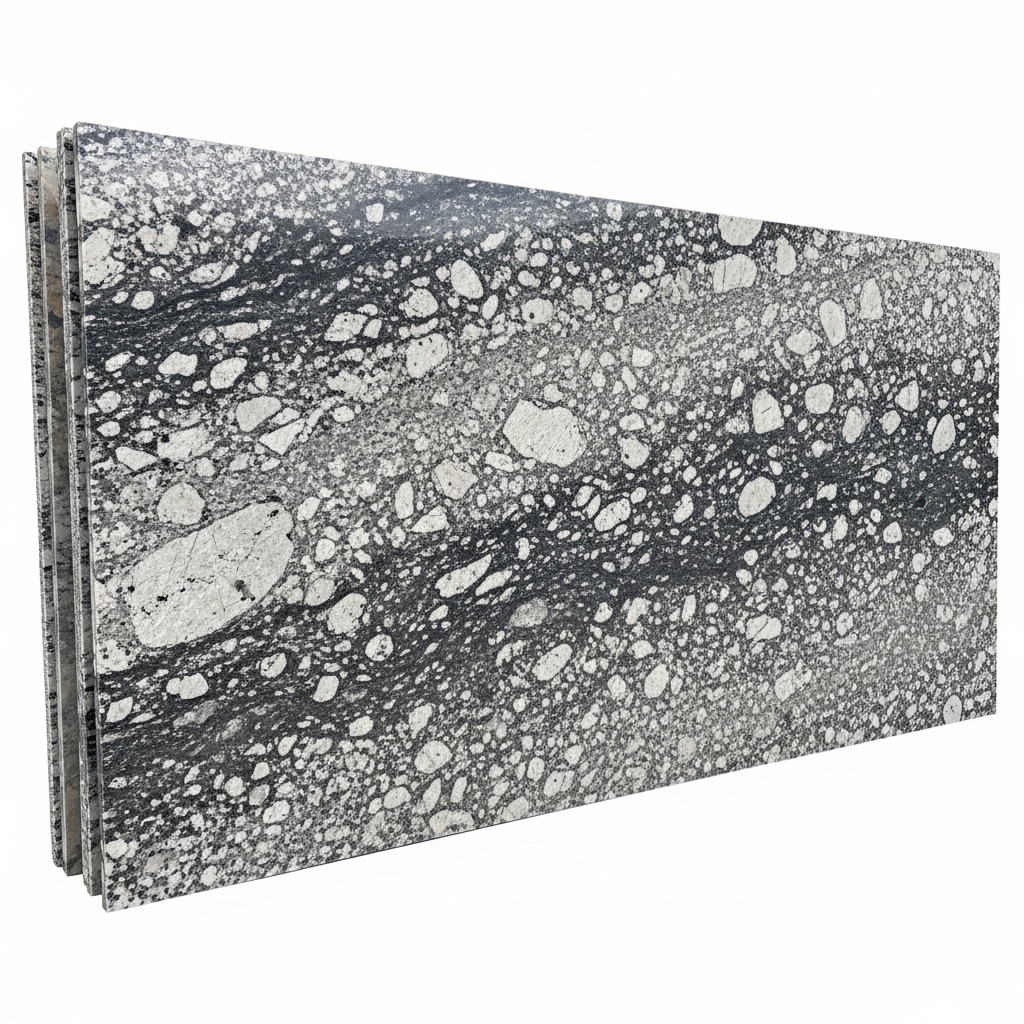
Regular Size
108–120 in × 60–72 in, thickness 0.79 in (2 cm) or 1.18 in (3 cm).
Jumbo Size
126 in × 78 in, thickness 0.79 in (2 cm) or 1.18 in (3 cm).
Super Size
138 in × 78 in, thickness 0.79 in (2 cm) or 1.18 in (3 cm).
Super Jumbo
138 in × 78 in, thickness 0.79 in (2 cm) or 1.18 in (3 cm).
Mini Slab
96 in × 48 in, thickness 0.79 in (2 cm) or 1.18 in (3 cm).
Determining Granite Sheet Measurements
When determining granite sheet measurements for a project, it is essential to consider various factors that influence the final outcome.
First, assess the project dimensions, as accurate measurements are crucial for ensuring a proper fit. For instance, if you are covering a countertop that measures 72 inches by 25 inches, you will need to account for overhangs and seams, potentially increasing the required granite sheet size.
Next, the desired aesthetic plays a significant role; if you aim for a seamless look, larger slabs may be necessary, typically ranging from 108 inches by 54 inches, to minimize joints.
Budget constraints also impact your choices, as granite prices can vary widely based on quality and rarity. For example, while standard granite may cost around $40 to $60 per square foot, exotic varieties can exceed $100 per square foot, influencing the overall project budget.
Additionally, the fabricator’s expertise should not be overlooked; some fabricators may specialize in intricate designs or custom cuts, which can affect both the cost and the feasibility of your design.
Finally, specific design requirements, such as edge profiles or integrated sinks, will dictate the necessary measurements and cuts, ensuring that the final installation meets both functional and aesthetic expectations. By carefully considering these factors, you can effectively determine the appropriate granite sheet measurements for your project.
Granite Sheet Measurements: Why Go Jumbo
Determining granite sheet measurements is crucial for ensuring a perfect fit and maximizing the aesthetic appeal of your space.
One of the primary advantages of opting for larger granite sheets, often referred to as “jumbo” sizes, is the reduction in seams. For instance, a standard granite slab typically measures around 5 to 10 feet, while jumbo slabs can reach up to 10 to 12 feet in length.
This means fewer seams, which not only enhances the visual continuity of the surface but also minimizes potential weak points where water and dirt can accumulate. Additionally, larger sheets can significantly reduce installation time, as fewer pieces need to be handled and fitted together.
Furthermore, the use of jumbo granite sheets allows for more creative design possibilities, enabling homeowners and designers to create expansive countertops, islands, or wall cladding that can serve as stunning focal points in kitchens and bathrooms.
By investing in precise measurements and larger sheets, you ensure a more durable, visually appealing, and efficient installation, ultimately enhancing the value of your property.
Granite Slab Material: Expected Waste Margin
Granite slabs are a popular choice for countertops and other surfaces due to their durability and aesthetic appeal. When planning a project involving granite, it’s essential to consider the expected waste margin, which typically ranges from 10% to 20%. This margin accounts for various factors such as cutting, shaping, and potential defects in the stone. For instance, if you require a total of 50 square feet of granite, you should order between 55 to 60 square feet to ensure you have enough material to work with.
Additionally, the complexity of the design can influence the waste margin; intricate cuts or patterns may lead to higher waste percentages. It’s also important to factor in the layout of the slabs, as optimizing the arrangement can minimize waste.
When selecting your granite, be mindful of the color and pattern variations, as these can affect how pieces fit together. Consulting with a professional fabricator can provide valuable insights into managing waste effectively and ensuring a successful installation.
Granite Slab Material: Biggest Format Explained
Granite slab material is renowned for its durability and aesthetic appeal, making it a popular choice for various applications, particularly in countertops, flooring, and wall cladding. One of the most significant advantages of granite is its availability in large formats, which can enhance the visual continuity of a space. Big format granite slabs can measure up to 10 feet by 5 feet or even larger, allowing for fewer seams and a more cohesive look. This is particularly beneficial in kitchen countertops, where a seamless surface can create an elegant and modern appearance. The thickness of these slabs typically ranges from 2 cm to 3 cm, providing both strength and versatility. The larger dimensions not only reduce the number of joints but also minimize the potential for dirt accumulation and maintenance issues. Installation of big format granite slabs requires specialized techniques and equipment, as the weight and size can pose challenges. For instance, a single slab can weigh over 1,000 pounds, necessitating careful handling and transportation to avoid damage. Moreover, the variety of colors and patterns available in granite allows homeowners and designers to choose options that best fit their aesthetic preferences. From classic whites and blacks to vibrant blues and greens, the natural variations in granite ensure that each slab is unique. In terms of cost, big format granite slabs can range from $40 to $200 per square foot, depending on the quality and rarity of the stone. This investment not only enhances the beauty of a space but also adds value to a property, making it a worthwhile consideration for both residential and commercial projects. In conclusion, the use of big format granite slabs offers numerous benefits, including aesthetic appeal, durability, and ease of maintenance. With the right installation techniques and careful selection of materials, granite can transform any space into a stunning showcase of natural beauty.
Granite Slab Material: Floor-Ready Thickness Options
Granite slabs are a popular choice for flooring due to their durability, aesthetic appeal, and variety of colors and patterns. When considering granite for flooring, one of the key factors to take into account is the thickness of the slabs. Floor-ready thickness options typically range from 1 cm (approximately 0.39 inches) to 3 cm (approximately 1.18 inches). The choice of thickness can significantly impact both the installation process and the overall performance of the flooring.
Thinner slabs, such as the 1 cm option, are often lighter and easier to handle, making them suitable for wall applications or areas with less foot traffic. However, they may not be ideal for high-traffic zones where durability is paramount. On the other hand, the 2 cm and 3 cm slabs provide enhanced strength and resistance to chipping and cracking, making them more suitable for flooring in busy areas like kitchens and entryways.
In addition to durability, the thickness of the granite slab can also influence the installation method. Thicker slabs generally require more robust support structures and may necessitate a more complex installation process. For instance, a 3 cm slab may be installed directly on a concrete subfloor, while a 1 cm slab might need a backing material for added stability.
Moreover, the aesthetic aspect of granite flooring is also affected by thickness. Thicker slabs can create a more substantial look and feel, contributing to a luxurious ambiance in a space. The edges of thicker slabs can be polished to create a refined finish, enhancing the overall visual appeal.
Ultimately, the choice of granite slab thickness should be guided by the specific requirements of the space, including the expected foot traffic, the desired aesthetic, and the installation logistics. By carefully considering these factors, homeowners and designers can select the most appropriate granite slab thickness to achieve both functionality and beauty in their flooring projects.
Granite slab measurement overview for walls & decorative surfaces
A granite slab measurement overview summarizes the main variables that affect wall results: available slab ranges, chosen thickness, panel layout, and how natural variation is managed across the elevation.
Granite is commonly supplied in broad slab ranges (often around 2400–3300 mm by 1400–2000 mm as typical examples), and layouts are then planned to reduce seams in key viewing zones.
For vertical installation, thickness is often selected around 10–20 mm, while thicker pieces may be specified for exposed edges, deep returns, or strong framing details.
For example, placing seams at corners, within shadow gaps, or aligned to niche edges keeps joints subtle and helps the wall read as a continuous stone surface.
Because each slab is unique, the overview process usually includes slab selection and panel sequencing so grain direction and tone feel consistent panel-to-panel.
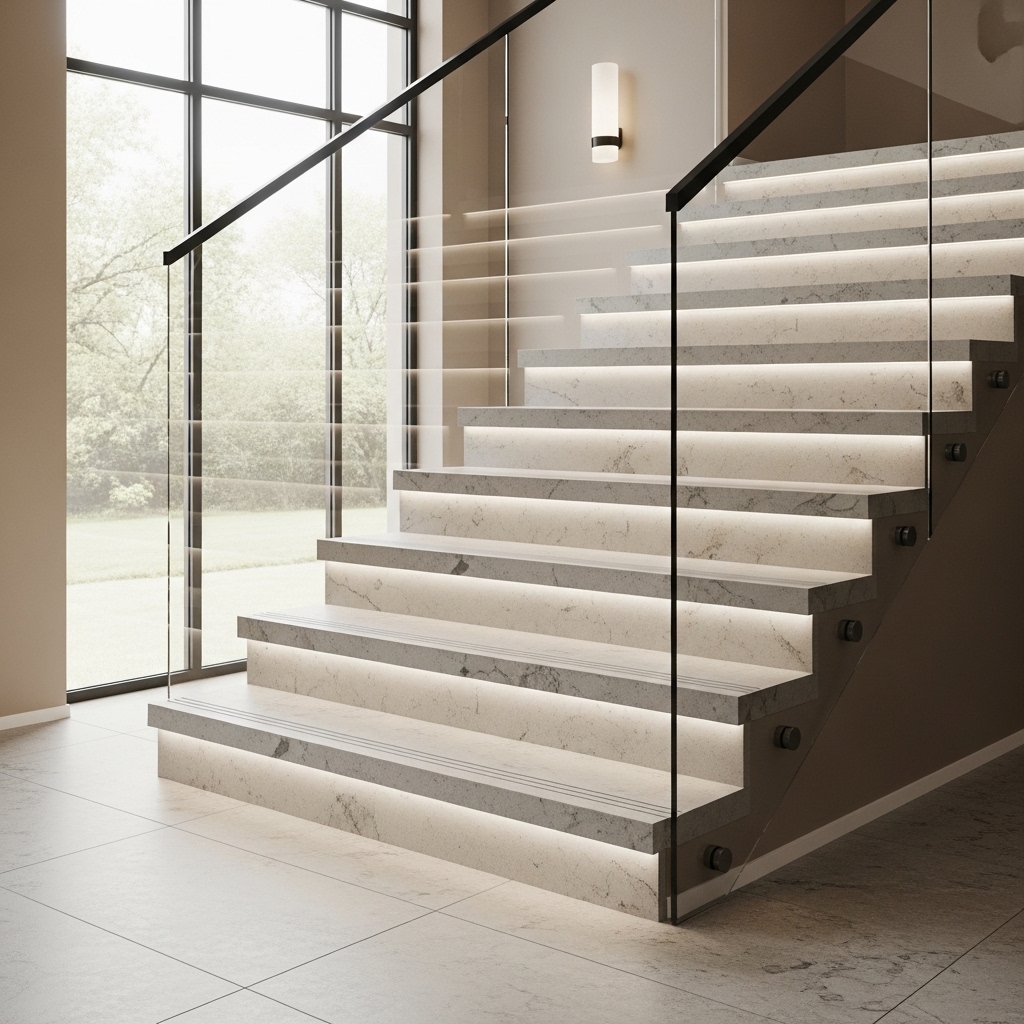
Granite slab measurement overview for stairs
A granite slab measurement overview for stairs combines site geometry, slab range selection, thickness choice, seam strategy, and edge detailing into one fabrication plan that controls both performance and appearance.
Granite slab availability typically comes as ranges such as 2400–3300 mm by 1400–2000 mm (examples), so layouts are often built around the best usable areas of the selected slabs rather than forcing a fixed module.
For example, the most visible surfaces—landings and central tread zones—are planned from the most consistent slab areas, while seams are aligned to side returns or perimeter edges to stay discreet.
Tread thickness commonly falls around 20–30 mm, and step noses are often eased or chamfered to reduce chipping and keep the profile crisp.
The overview also includes tolerances, joint widths, and skirting returns so every step aligns cleanly and the finished staircase reads straight.
For UAE homeowners and designers, what is the size of a slab of granite is usually answered with dimensions around 2800–3200 mm long and 1500–1800 mm wide, though exact sizes vary by batch. Thickness is commonly 20 mm or 30 mm, depending on structural and aesthetic needs. These measurements closely match the standard size granite slab referenced by most suppliers.
What Is the Size of a Slab of Granite for Travertine Slab Applications
When asking what is the size of a slab of granite for travertine slab applications, most suppliers reference slabs between 2800–3200 mm long and 1500–1800 mm wide. These dimensions allow granite to be used alongside natural stone floors or wall panels without excessive cutting. Pairing granite slabs of this size with a travertine slab ensures balanced proportions and smooth visual transitions between materials.
What Is the Size of a Slab of Granite for Raised Floor Design
When asking what is the size of a slab of granite for effective raised floor design, most suppliers offer slabs between 2800 and 3200 mm in length. This size range allows granite to be fabricated into multiple components that align neatly with raised floor modules and transition details.