
What is the Size of a Slab of Quartz?
The size of a slab of quartz is most often one of the standard manufacturing formats used for countertop fabrication: a typical standard slab is 56 in × 120 in (142.24 cm × 304.80 cm), while a typical jumbo slab is 63 in × 126 in (160.02 cm × 320.04 cm) for larger kitchens and islands. Some brands also supply extra-large slabs around 65 in × 130 in (165.10 cm × 330.20 cm) to reduce seams on wide islands and waterfall ends, and select lines go even larger. Quartz slab thickness is commonly 2 cm (0.79 in / 20 mm) or 3 cm (1.18 in / 30 mm, often labeled “1¼ in” nominal), with some specialty ranges offered at 12 mm (0.47 in / 1.2 cm).
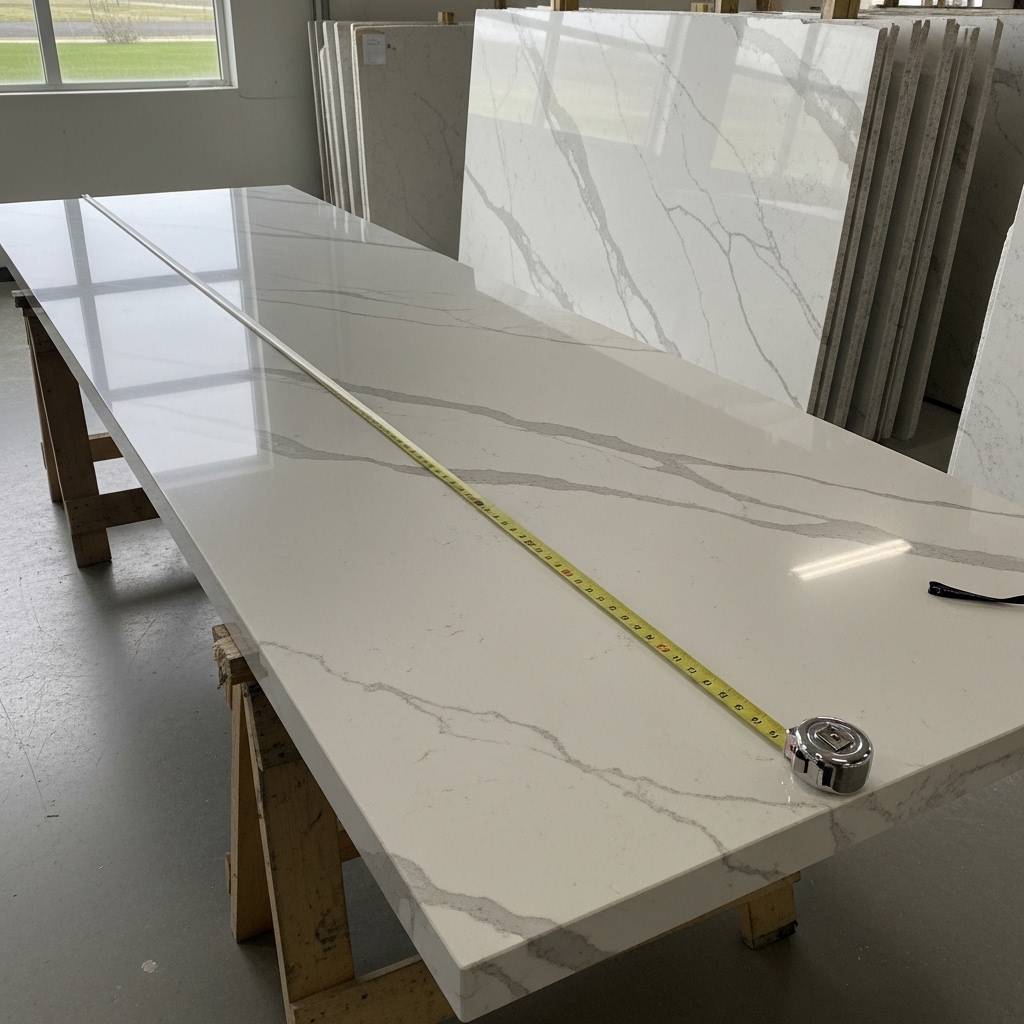
Regular Size
56 in × 120 in, thickness 0.79 in (2 cm) or 1.18 in (3 cm).
Jumbo Size
63 in × 126 in, thickness 0.79 in (2 cm) or 1.18 in (3 cm).
Super Size
78 in × 138 in, thickness 0.79 in (2 cm) or 1.18 in (3 cm).
Super Jumbo
137.80 in × 78.74 in, thickness 0.79 in (2 cm) or 1.18 in (3 cm).
Mini Slab
48 in × 96 in, thickness 0.79 in (2 cm) or 1.18 in (3 cm).
Determining the Right Quartz Sheet Measurement
When determining the right quartz sheet measurement for your project, it is essential to consider various factors that align with your specific needs.
First, assess the project dimensions; accurate measurements of the space where the quartz will be installed are crucial. For instance, if you are covering a countertop that measures 72 inches by 25 inches, you will need a quartz sheet that can accommodate these dimensions, typically available in standard sizes like 120 inches by 55 inches.
Next, the desired aesthetic plays a significant role; whether you prefer a sleek, modern look or a more traditional appearance, the color and pattern of the quartz should complement your overall design vision.
Budget constraints are another critical factor; quartz can range from $50 to $150 per square foot, so it’s important to establish a budget early on to narrow down your options without compromising on quality.
Additionally, consider the fabricator’s expertise; working with a skilled fabricator can ensure that the quartz is cut and installed correctly, which is vital for achieving a polished finish.
Lastly, specific design requirements, such as the need for custom edges or cutouts for sinks, should be communicated clearly to ensure that the final product meets your expectations. By carefully evaluating these aspects, you can determine the right quartz sheet measurement that aligns with your project goals.
Larger Quartz Sheets: Why They’re Better
Determining the right quartz sheet measurement is crucial for maximizing the benefits of this versatile material in various applications. One significant advantage of larger quartz sheets is their ability to minimize seams, creating a more seamless and aesthetically pleasing surface. For instance, a larger sheet measuring 120 inches by 55 inches can cover a significant area without the need for multiple pieces, which not only enhances the visual appeal but also simplifies installation. Additionally, larger quartz sheets often provide better durability and resistance to cracking, as fewer seams mean fewer weak points. This durability is particularly beneficial in high-traffic areas such as kitchens and bathrooms, where wear and tear are common. Furthermore, larger sheets can be more cost-effective in the long run, as they reduce waste and the need for additional materials. By investing in the right measurements, homeowners and designers can achieve a more cohesive look while enjoying the practical benefits of quartz, such as its non-porous nature and ease of maintenance. Ultimately, selecting the appropriate quartz sheet size not only elevates the design but also enhances functionality, making it a wise choice for any project.
Estimated Fabrication Waste for Quartz Surfacing
Estimated fabrication waste for quartz surfacing is a significant consideration in the production process, as it impacts both cost and environmental sustainability. Typically, the fabrication of quartz surfaces can result in waste levels ranging from 20% to 30% of the total material used. This waste primarily arises from cutting, shaping, and finishing processes, where excess material is removed to achieve the desired dimensions and aesthetics.
To mitigate this waste, fabricators can adopt several strategies, such as optimizing the layout of cuts on the slabs to maximize yield and minimize off-cuts. For instance, using advanced software for digital templating can help in planning the most efficient use of the material.
Additionally, recycling options are increasingly available, allowing for the repurposing of scrap material into new products or even smaller quartz surfaces. By implementing these practices, fabricators can reduce their waste percentage significantly, potentially lowering it to around 10% or less, which not only enhances profitability but also contributes to more sustainable manufacturing practices.
Quartz Sheets: Maximum Format Explained
Quartz sheets are engineered stone surfaces made primarily from natural quartz crystals, resin, and pigments. These sheets are known for their durability, aesthetic appeal, and versatility in various applications, particularly in kitchen countertops, bathroom vanities, and flooring. One of the key aspects of quartz sheets is their maximum format, which refers to the largest size available for these surfaces. Understanding the maximum format is crucial for both designers and consumers, as it impacts installation, design possibilities, and overall functionality.
Typically, quartz sheets come in standard sizes, with the maximum format often reaching dimensions of approximately 126 inches by 63 inches (320 cm by 160 cm). This large format allows for fewer seams in installations, creating a more seamless and visually appealing surface. For instance, when using a maximum format quartz sheet for a kitchen island, the expansive surface can enhance the overall design and provide ample space for food preparation and social gatherings.
Moreover, the thickness of quartz sheets usually ranges from 1 cm to 3 cm, with thicker options providing greater durability and resistance to chipping and cracking. The choice of thickness can also influence the overall weight of the material, which is an important consideration during installation. For example, a 3 cm thick quartz sheet can weigh around 20-25 pounds per square foot, necessitating proper support and installation techniques to ensure safety and longevity.
In addition to size and thickness, the maximum format of quartz sheets allows for a variety of design options. With advancements in manufacturing technology, these sheets can be produced in a wide range of colors, patterns, and finishes, mimicking the appearance of natural stone while offering enhanced performance. This versatility makes quartz an attractive choice for both contemporary and traditional design styles.
When planning a project that involves quartz sheets, it is essential to consider the maximum format in relation to the specific application. For larger spaces, utilizing the maximum format can minimize the number of seams, which not only improves aesthetics but also simplifies maintenance. Additionally, larger sheets can reduce the time and labor required for installation, making them a practical choice for both residential and commercial projects.
In conclusion, the maximum format of quartz sheets plays a significant role in their application and overall appeal. With dimensions that can reach up to 126 inches by 63 inches, combined with various thickness options, these engineered surfaces offer both beauty and functionality. As the demand for durable and stylish materials continues to grow, understanding the benefits of quartz sheets and their maximum format will help consumers and designers make informed decisions for their projects.
Quartz Surfacing: Best Thickness for Busy Floors
Quartz surfacing is a popular choice for busy floors due to its durability and aesthetic appeal. When considering the best thickness for quartz surfaces in high-traffic areas, it is essential to balance strength and weight. Typically, quartz slabs are available in thicknesses of 1 cm (0.39 inches), 2 cm (0.79 inches), and 3 cm (1.18 inches). For busy floors, a thickness of 2 cm is often recommended as it provides a good compromise between durability and manageability.
A 2 cm thick quartz surface can withstand significant wear and tear, making it suitable for areas such as kitchens, commercial spaces, and entryways where foot traffic is high. This thickness is also easier to handle and install compared to thicker options, which can be cumbersome and require additional support structures.
Moreover, the weight of the material is an important consideration. A 2 cm thick quartz slab typically weighs around 20-25 pounds per square foot, making it manageable for installation while still providing the necessary strength to resist cracking and chipping. In contrast, a 3 cm thick slab, while more robust, can weigh up to 30-35 pounds per square foot, which may necessitate additional reinforcement in flooring systems.
In addition to thickness, the choice of finish can also impact the performance of quartz surfacing in busy areas. A honed or textured finish can provide better slip resistance, which is crucial in preventing accidents in high-traffic environments.
Ultimately, selecting the right thickness for quartz surfacing in busy floors involves considering factors such as the expected foot traffic, the weight-bearing capacity of the underlying structure, and the desired aesthetic. A 2 cm thickness strikes a balance that meets the demands of both functionality and style, making it an ideal choice for those looking to enhance their spaces with durable and attractive flooring solutions.
Quartz slab dimensions overview for walls & decorative surfaces
A quartz slab dimensions overview for walls and decorative surfaces summarizes the key size and thickness choices that affect both aesthetics and installation: slab format, thickness for vertical use, and layout strategy for seams and pattern direction.
Many widely used quartz formats include large slabs such as 3000 × 1400 mm and 3200 × 1600 mm, while jumbo and maximum formats can extend beyond these sizes to help reduce seams on larger feature walls.
Thickness is commonly selected around 6–12 mm for wall panels to control weight and handling, while 20 mm may be used when matching countertop profiles or when edges and returns are part of the visible design language.
As a simple example, using a 3200 × 1600 mm panel (about 5.12 m² coverage) can reduce the number of joints on a wall elevation, helping veining patterns look more continuous and the surface feel more monolithic.
A strong layout plan typically sequences panels for continuity, aligns seams with architectural breaks, and keeps joint spacing consistent so the decorative wall reads clean and premium from every viewing angle.
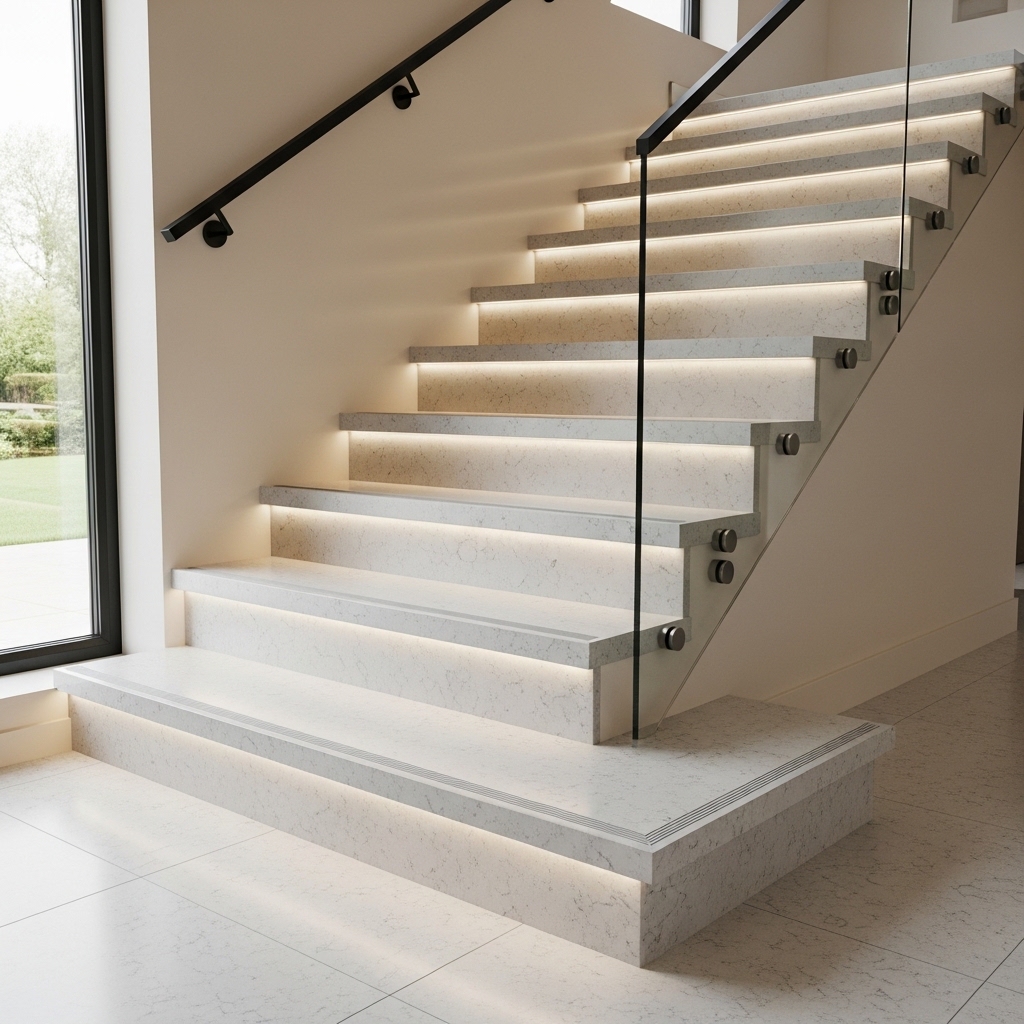
Quartz slab dimensions overview for stairs
A quartz slab dimensions overview for stairs focuses on selecting slab formats that provide enough cutting flexibility for repeated treads, matching risers, and landing pieces while keeping seams minimal in focal zones.
Common quartz slab examples include 3000 × 1400 mm and 3200 × 1600 mm, with jumbo options like 3300 × 1650 mm offering extra flexibility for wide landings or long tread runs.
Stair treads typically use 20 mm thickness for strength and a premium feel, while thicker-looking noses can be achieved through edge build-ups if a bolder step profile is required.
For example, choosing a larger slab can keep a landing surface more continuous, while the tread pieces can be cut in a repeated orientation to maintain consistent pattern direction across the flight.
A strong overview also includes finish choice and edge detailing, since honed/matte finishes can feel more practical on steps and a chamfered edge can reduce chipping risk at high-contact corners.
Clients in the UAE asking what is the size of a slab of quartz are usually shown standard slabs at about 3040 × 1440 mm and jumbo options near 3200 × 1600 mm, with thickness choices of 20 mm or 30 mm. These sizes are well suited for kitchens, bathrooms, and commercial counters where uniformity is key. For decorative applications and terrazzo-style finishes, fabricators may also reference a stone chips size chart to explain aggregate proportions used within engineered surfaces.
What Is the Size of a Slab of Quartz for Quartz Countertops Design
When asking what is the size of a slab of quartz for quartz countertops design, most suppliers reference standard slabs measuring about 3040 × 1440 mm, with jumbo options reaching up to 3200 × 1600 mm. These sizes are suitable for long counters, islands, and waterfall edges. Choosing the right slab size for quartz countertops ensures fewer joints, stronger edges, and a more premium finished appearance.
What Is the Size of a Slab of Quartz for Raised Floor Planning
When evaluating what is the size of a slab of quartz for effective raised floor planning, most projects rely on slabs ranging from 3040 × 1440 mm to 3200 × 1600 mm. These dimensions allow multiple components to be fabricated from a single slab while matching the modular nature of raised floors. This approach supports precision detailing and long-term performance.