
Quartz Countertop Slab Size Guide
Quartz countertop slab size is usually chosen to minimize seams across typical kitchen dimensions, so fabricators often work with slabs such as 56 in × 120 in (142.24 cm × 304.80 cm) or jumbo slabs like 63 in × 126 in (160.02 cm × 320.04 cm), and some brands offer larger options around 65 in × 130 in (165.10 cm × 330.20 cm) for wide islands and waterfall ends. Once cut, many standard kitchen countertop sections finish around 25–25.5 in deep (63.50–64.77 cm), with lengths tailored to the kitchen run, while thickness is most commonly 2 cm (0.79 in) or 3 cm (1.18 in; often marketed as “1¼ in” nominal); thicker-looking edges can be achieved by building up the front edge to about 1.5 in (3.81 cm) without using a full-thickness slab everywhere.
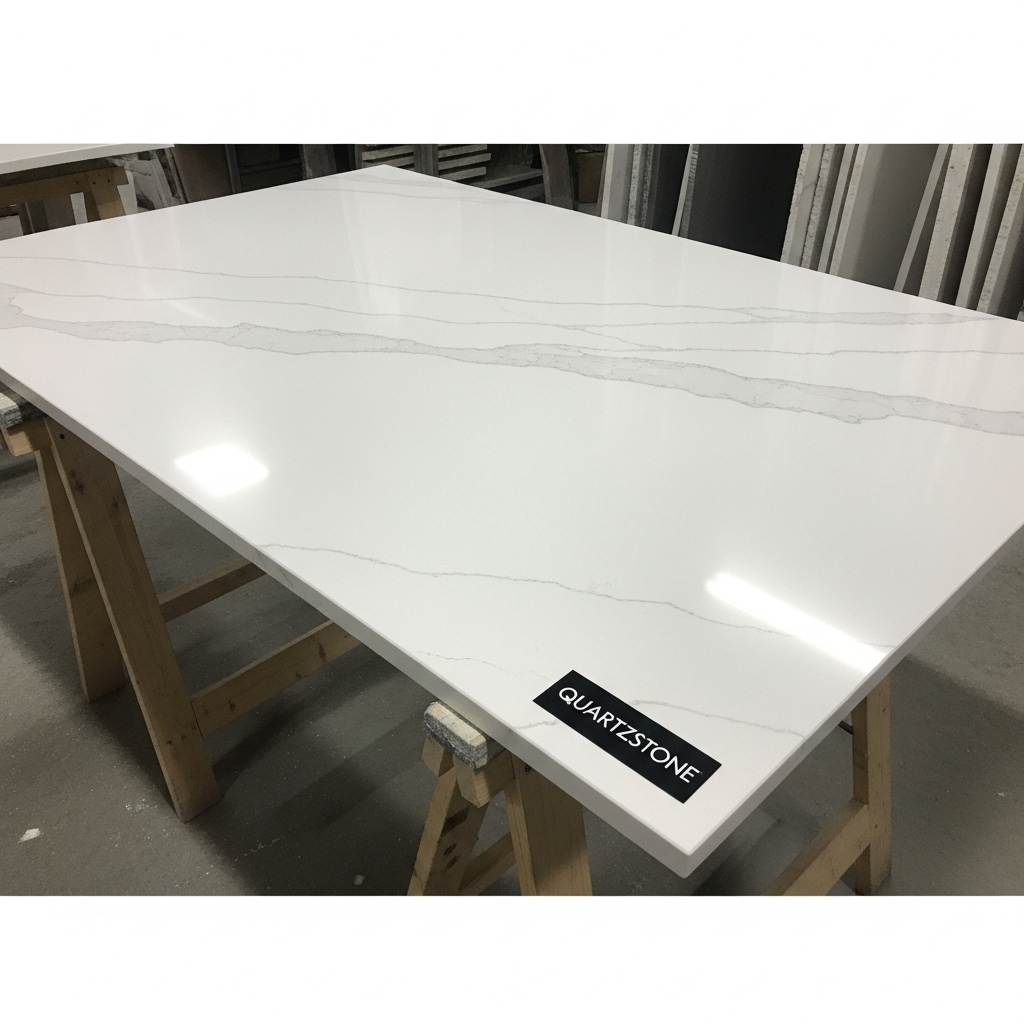
Regular Size
56 in × 120 in (or 63 in × 126 in jumbo), thickness 0.79 in (2 cm) or 1.18 in (3 cm).
Jumbo Size
63 in × 126 in, thickness 0.79 in (2 cm) or 1.18 in (3 cm).
Super Size
78 in × 138 in, thickness 0.79 in (2 cm) or 1.18 in (3 cm).
Super Jumbo
137.80 in × 78.74 in, thickness 0.79 in (2 cm) or 1.18 in (3 cm).
Mini Slab
48 in × 96 in, thickness 0.79 in (2 cm) or 1.18 in (3 cm).
Getting the Right Fit for Quartz Countertop Panels
When selecting quartz countertop panels, achieving the right fit involves careful consideration of several factors.
First, project dimensions play a crucial role; measure the space accurately, accounting for any irregularities or obstacles, and ensure that the panels can be cut to fit seamlessly. For instance, if your kitchen island measures 72 inches by 36 inches, you’ll need to ensure that the quartz slab can accommodate these dimensions without excessive seams.
Desired aesthetic is another important aspect; whether you prefer a sleek, modern look or a more traditional style, choose colors and patterns that complement your overall design. For example, a white quartz with subtle veining can create a sophisticated appearance, while a bold, dark hue may add drama.
Budget constraints must also be taken into account, as quartz countertops can range from $50 to $150 per square foot, depending on the quality and brand. Establishing a clear budget will help narrow down options and prevent overspending.
The fabricator’s expertise is vital; select a professional with experience in working with quartz to ensure precise cuts and finishes. Ask for references and view previous projects to gauge their skill level.
Lastly, specific design requirements, such as integrated sinks or custom edge profiles, should be communicated clearly to the fabricator. If you desire a waterfall edge for your countertop, ensure that the fabricator can execute this design flawlessly. By considering these factors, you can achieve a perfect fit for your quartz countertop panels that meets both functional and aesthetic needs.
Jumbo Quartz Countertop Panels: Why They’re Better
Getting the right fit for quartz countertop panels, especially jumbo quartz countertop panels, offers numerous advantages that enhance both aesthetics and functionality in any space.
One of the primary benefits is the seamless appearance that larger panels provide, minimizing the number of joints and seams, which can often be a focal point in traditional countertops.
Jumbo quartz panels, typically measuring 126 inches by 63 inches, allow for expansive surfaces that can cover larger areas without the need for multiple pieces, resulting in a more cohesive look.
Additionally, the right fit ensures better durability and longevity, as fewer seams mean fewer opportunities for moisture infiltration and damage.
With quartz being non-porous, it is resistant to stains and bacteria, making it an ideal choice for kitchens and bathrooms.
Furthermore, the installation process can be more efficient with larger panels, reducing labor costs and installation time by up to 30%.
Overall, investing in the right fit for quartz countertops not only elevates the design of your space but also enhances the practicality and maintenance of your surfaces.
Average Fabrication Waste for Quartz Countertops
Average fabrication waste for quartz countertops typically ranges between 20% to 30% of the total material used. This waste is generated during the cutting, shaping, and finishing processes, as fabricators work to create precise dimensions and designs that fit specific kitchen or bathroom layouts.
The most common sources of waste include off-cuts from the edges, remnants from sink cutouts, and excess material removed during polishing. For instance, if a fabricator starts with a slab that weighs 1000 pounds, they might end up with 200 to 300 pounds of waste, depending on the complexity of the design and the efficiency of the cutting process.
To minimize this waste, many fabricators employ advanced technology such as CNC machines, which can optimize cuts and reduce off-cuts significantly. Additionally, some companies are now recycling quartz remnants into new products, further reducing the environmental impact. By understanding and managing fabrication waste, both fabricators and consumers can contribute to more sustainable practices in the countertop industry.
Largest Quartz Countertop Panel Format Available
The largest quartz countertop panel format available on the market today is typically around 126 inches by 63 inches, which translates to approximately 10.5 feet by 5.25 feet. This expansive size allows for fewer seams and a more cohesive look in kitchen and bathroom designs.
The thickness of these panels generally ranges from 1 cm to 3 cm, providing versatility for various applications, whether for countertops, backsplashes, or even wall cladding.
One of the significant advantages of large-format quartz panels is their ability to create a seamless appearance, which is highly desirable in modern interior design. With fewer joints, the risk of dirt and grime accumulating in seams is minimized, making maintenance easier and enhancing the overall aesthetic appeal.
Additionally, the large size of these panels can significantly reduce installation time, as fewer pieces need to be handled and fitted together.
In terms of weight, a standard large quartz panel can weigh between 200 to 300 pounds, depending on its thickness and specific composition. This weight necessitates careful handling and professional installation to ensure safety and stability.
The durability of quartz countertops is another compelling feature; they are resistant to scratches, stains, and heat, making them an ideal choice for high-traffic areas.
Furthermore, the variety of colors and patterns available in large quartz panels allows homeowners and designers to achieve a customized look that can mimic natural stone or offer bold, contemporary designs. With advancements in technology, manufacturers are now able to produce quartz surfaces that feature intricate veining and unique textures, providing endless design possibilities.
Overall, the availability of large-format quartz countertop panels has revolutionized the way spaces are designed, offering both functionality and style in one elegant package.
Quartz Countertop Panels: Thickness for High-Traffic Spaces
Quartz countertop panels are increasingly popular in both residential and commercial settings, particularly in high-traffic spaces where durability and aesthetics are paramount. One of the critical factors to consider when selecting quartz countertops for these environments is the thickness of the panels. Typically, quartz countertops come in various thicknesses, with 1 cm (approximately 0.39 inches), 2 cm (approximately 0.79 inches), and 3 cm (approximately 1.18 inches) being the most common options.
For high-traffic areas such as kitchens, restaurants, and retail spaces, opting for thicker panels, such as 2 cm or 3 cm, is advisable. Thicker countertops not only provide enhanced durability but also offer better resistance to chipping and cracking, which is essential in environments where heavy objects may be placed on the surface or where frequent use is expected. For instance, a 3 cm thick quartz countertop can withstand significant weight and impact, making it ideal for busy kitchen islands or bar tops.
Moreover, the thickness of the quartz can also influence the overall aesthetic appeal of the space. Thicker panels tend to have a more substantial and luxurious appearance, which can elevate the design of any room. In high-traffic areas, where first impressions matter, a 3 cm thick countertop can serve as a striking focal point, showcasing the beauty of the quartz material while ensuring it remains functional under pressure.
In addition to aesthetics and durability, maintenance is another crucial consideration. Thicker quartz countertops are generally easier to maintain, as they are less prone to damage and can be cleaned more effectively. For high-traffic spaces, where spills and stains are more likely to occur, having a robust surface that can withstand daily wear and tear is essential.
Ultimately, when selecting quartz countertop panels for high-traffic spaces, it is vital to consider the balance between thickness, durability, and design. Choosing a thickness of 2 cm or 3 cm can provide the necessary strength and longevity while enhancing the overall look of the environment. By investing in quality quartz countertops with appropriate thickness, property owners can ensure that their surfaces remain beautiful and functional for years to come.
Quartz countertop slab dimensions for walls & decorative applications
Quartz countertop slabs are commonly repurposed for walls and decorative applications when the goal is a cohesive, continuous look between horizontal worktops and vertical surfaces like backsplashes, bar fronts, and feature panels.
Countertop-grade slabs are often supplied in large formats such as 3000 × 1400 mm or 3200 × 1600 mm (common examples), and many ranges offer thicknesses like 20 mm or 30 mm for counters—while wall applications may use thinner variants from the same design family to reduce load.
A popular approach is to use the same slab batch for both the countertop and a full-height backsplash so the pattern direction and color tone match, especially with bold veining designs that look best when they flow from counter up the wall.
For example, one slab can be cut to create the main countertop run plus a matching backsplash panel, letting the installer align the vein movement so it appears “connected” rather than looking like separate materials.
When countertop slabs go vertical, seam placement is usually coordinated with functional zones—behind the hob, around windows, or at cabinet boundaries—so joints are less noticeable and cleaning stays easy in high-splash areas.
Quartz countertop slab dimensions for stairs
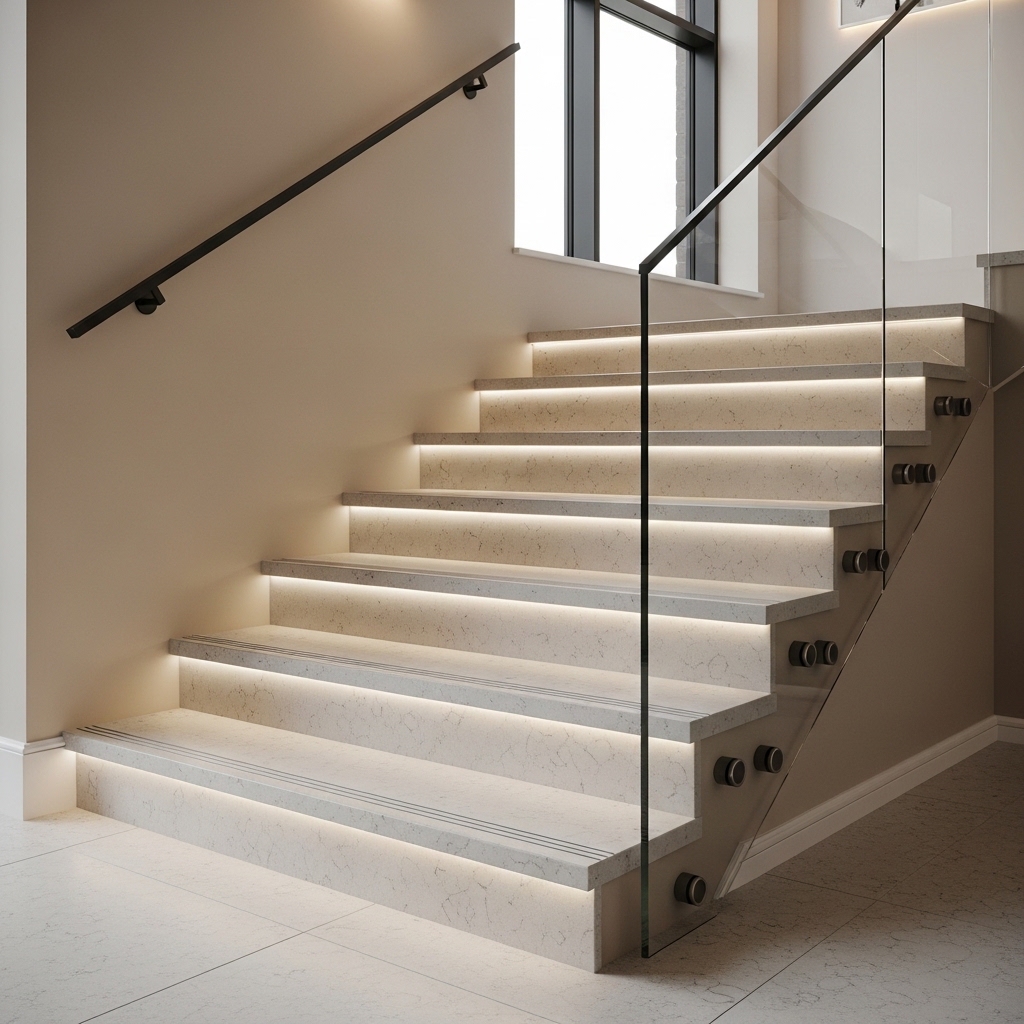
Quartz countertop slabs can be adapted for stairs when the goal is a consistent material theme between kitchen worktops and architectural elements like treads, risers, and stair cladding.
Countertop-grade quartz is commonly supplied in large formats such as 3000 × 1400 mm or 3200 × 1600 mm (typical examples), and thicknesses like 20 mm are frequently used for robust, premium-feel tread surfaces.
For stairs, fabricators often plan the step nose profile carefully—either using the full thickness or creating a thicker visual edge with a laminated build-up—so the staircase looks substantial and well-finished.
As an example, the same quartz design used on a kitchen island can be continued onto stair treads and a landing, creating a unified look across open-plan spaces.
Since stairs receive heavy foot traffic, finish and grip are key considerations; many projects prefer honed or matte finishes on tread surfaces and use well-detailed edges to reduce chipping over time.
In the UAE, quartz countertop slab size selection usually starts from standard 3040 × 1440 mm and commonly moves to jumbo 3200 × 1600 mm for bigger kitchens, islands, and fewer-seam installations; typical stocked thickness is 20 mm, with 30 mm used when a thicker visual edge is desired. For many projects, a 3000 mm straight run can be made in one piece on a jumbo slab, while islands around 2400–3000 mm long often benefit from the wider 1600 mm format to avoid center seams. To set expectations during budgeting and templating, it helps to reference the average size of quartz slab in UAE showrooms—generally around 3040 × 1440 mm—then upgrade only where the layout truly needs the extra width or length.
Quartz Countertop Slab Size Guide for Armani Gray Marble Kitchen Designs
A quartz countertop slab size guide for Armani Gray marble kitchen designs typically focuses on slabs sized around 3040 × 1440 mm for standard layouts and up to 3200 × 1600 mm for larger islands. These sizes allow long, uninterrupted counter runs with subtle veining alignment and minimal seams. When paired with armani gray marble design aesthetics, quartz slabs in these dimensions deliver a refined, contemporary look while maintaining consistent thickness options of 20 mm or 30 mm for structural strength and edge detailing.
Quartz Countertop Slab Size Coordination with Raised Floor Systems
Quartz countertop slab size coordination is a key design step when working alongside integrated raised floor systems. Countertops are often fabricated from slabs measuring 3040 × 1440 mm or larger, with thicknesses selected based on usage and span. Proper coordination ensures finished countertop heights remain ergonomic, access panels remain functional, and both the flooring and work surfaces perform seamlessly together over time.