
Size of Quartz Slab
The size of a quartz slab varies by manufacturer, but the most common ranges you’ll see in showrooms and fabrication shops include 56 in × 120 in (142.24 cm × 304.80 cm), 63 in × 126 in (160.02 cm × 320.04 cm), and in some brands a slightly larger format like 65 in × 130 in (165.10 cm × 330.20 cm) to better handle big islands and waterfall panels. Quartz is typically stocked in 2 cm (0.79 in) and 3 cm (1.18 in; often labeled “1¼ in” nominal) thicknesses, with select collections also available at 12 mm (1.2 cm / 0.47 in) for lighter-duty or special-design uses.
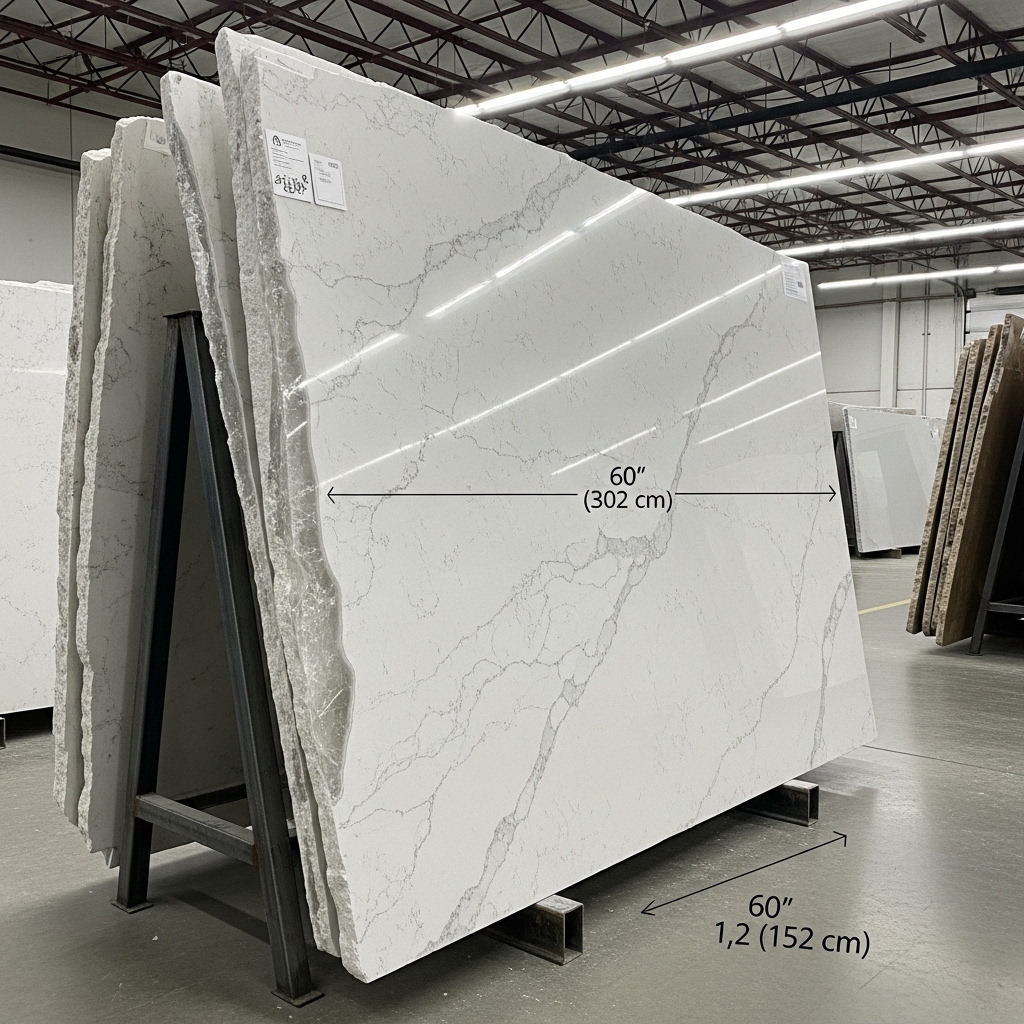
Regular Size
56 in × 120 in, thickness 0.79 in (2 cm) or 1.18 in (3 cm).
Jumbo Size
63 in × 126 in, thickness 0.79 in (2 cm) or 1.18 in (3 cm).
Super Size
78 in × 138 in, thickness 0.79 in (2 cm) or 1.18 in (3 cm).
Super Jumbo
137.80 in × 78.74 in, thickness 0.79 in (2 cm) or 1.18 in (3 cm).
Mini Slab
48 in × 96 in, thickness 0.79 in (2 cm) or 1.18 in (3 cm).
Understanding Quartz Sheet Measurements
Understanding quartz sheet measurements is crucial for achieving the desired outcome in any project.
When considering project dimensions, it is essential to accurately measure the space where the quartz will be installed, as standard quartz sheets typically come in sizes of 120 inches by 55 inches, with a thickness of 1.5 cm or 2 cm.
The desired aesthetic plays a significant role in selecting the right quartz; for instance, if a sleek, modern look is preferred, lighter colors with minimal veining may be ideal, while a more traditional style might benefit from darker hues with pronounced patterns.
Budget constraints are another critical factor, as quartz can range from $50 to $100 per square foot, depending on the quality and brand.
It is also important to consider the fabricator’s expertise, as skilled fabricators can provide better precision in cutting and finishing, which is vital for intricate designs or large installations.
Lastly, specific design requirements, such as edge profiles or custom cutouts for sinks, must be communicated clearly to ensure that the final product meets expectations. By carefully evaluating these aspects, one can make informed decisions that align with both functional needs and aesthetic desires.
The Value of Larger Quartz Sheet Measurements
Understanding quartz sheet measurements is crucial for both aesthetic and functional applications in various industries, particularly in construction and interior design. Larger quartz sheet measurements, such as 120 inches by 55 inches, offer significant advantages over smaller sizes.
Firstly, larger sheets reduce the number of seams required in installations, which not only enhances the visual appeal by providing a more seamless look but also minimizes potential weak points where water or dirt can accumulate.
Additionally, larger measurements can lead to cost savings in terms of material waste; when using smaller sheets, more cuts are necessary, which can result in excess scrap material. For instance, using a single large sheet instead of multiple smaller ones can save up to 20% in material costs.
Furthermore, larger quartz sheets can improve the structural integrity of countertops and surfaces, as they are less likely to warp or crack compared to smaller pieces that are joined together.
Overall, understanding and utilizing larger quartz sheet measurements can lead to enhanced durability, aesthetic appeal, and cost efficiency in various applications.
Expected Offcuts for Quartz Material
When working with quartz material, it is essential to consider the expected offcuts during the fabrication process. Offcuts refer to the leftover pieces of material that result from cutting the quartz slabs to fit specific dimensions. Typically, the amount of offcut can vary based on the complexity of the design and the size of the slabs used. For instance, if a standard quartz slab measures 120 inches by 55 inches, and the desired countertop dimensions are 96 inches by 25 inches, the offcut could be approximately 24 inches by 30 inches, which represents about 20% of the original slab.
To minimize waste, careful planning and layout optimization are crucial. Utilizing software tools for digital templating can help in maximizing the use of each slab, thereby reducing the amount of offcut. Additionally, it is advisable to keep a record of offcuts, as these smaller pieces can often be repurposed for smaller projects, such as backsplashes or cutting boards.
In general, the expected offcut percentage can range from 10% to 30%, depending on the project specifics, so budgeting for this material waste is important for both cost management and environmental considerations.
Ultimate Quartz Sheet Format Options
Ultimate Quartz Sheet Format Options provide a versatile and innovative solution for various applications, particularly in the realms of interior design and architecture. These sheets are engineered from natural quartz crystals, combined with resins and pigments, resulting in a non-porous, durable surface that is both aesthetically pleasing and functional.
One of the most significant advantages of Ultimate Quartz Sheets is their wide range of format options. They are available in various thicknesses, typically ranging from 12mm to 30mm, allowing designers to choose the perfect fit for their projects. The standard dimensions often include sizes like 3000mm x 1400mm, which can be easily cut and shaped to meet specific design requirements. This flexibility makes them ideal for countertops, wall cladding, and even flooring applications.
In terms of color and texture, Ultimate Quartz Sheets offer an extensive palette. From classic whites and grays to vibrant blues and greens, the options are nearly limitless. Textured finishes, such as polished, honed, or leathered, can enhance the visual appeal and tactile experience of the surface. For instance, a polished finish can reflect light beautifully, making spaces feel larger and more open, while a honed finish provides a more understated, matte look that can complement contemporary designs.
Moreover, the durability of these quartz sheets is a key selling point. They are resistant to scratches, stains, and heat, making them suitable for high-traffic areas and environments where spills are common. For example, a kitchen countertop made from Ultimate Quartz can withstand the rigors of daily use without showing signs of wear. Additionally, their non-porous nature means they do not harbor bacteria, making them a hygienic choice for food preparation areas.
Sustainability is another important aspect of Ultimate Quartz Sheets. Many manufacturers are now focusing on eco-friendly production processes, utilizing recycled materials and minimizing waste. This commitment to sustainability not only appeals to environmentally conscious consumers but also aligns with the growing trend of green building practices.
In conclusion, Ultimate Quartz Sheet Format Options present a comprehensive solution for those seeking high-quality, versatile surfaces. With their variety of formats, colors, textures, and durability, they cater to a wide range of design needs while also promoting sustainability. Whether for residential or commercial projects, these quartz sheets are an excellent choice for creating stunning and functional spaces.
High-Traffic Thickness Recommendations for Quartz Material
When selecting quartz material for high-traffic areas, it is crucial to consider the thickness of the slabs to ensure durability and longevity. Typically, quartz countertops come in thicknesses of 1 cm (3/8 inch), 2 cm (3/4 inch), and 3 cm (1 1/4 inch). For high-traffic environments such as commercial kitchens, restaurants, or busy retail spaces, a thickness of 3 cm is highly recommended. This thickness provides enhanced strength and resistance to chipping, cracking, and other forms of wear that can occur in areas with heavy foot traffic or frequent use.
In addition to thickness, the installation method plays a significant role in the performance of quartz surfaces in high-traffic areas. Using proper support structures and ensuring that the seams are strategically placed can further enhance the durability of the material. For instance, when installing a 3 cm thick quartz countertop, it is advisable to use a solid substrate to prevent sagging and to distribute weight evenly. This is particularly important in spaces where heavy equipment or appliances may be placed on the surface.
Moreover, the choice of finish can also impact the performance of quartz in high-traffic areas. Polished finishes, while aesthetically pleasing, may show scratches more readily than honed or textured finishes. Therefore, for environments where aesthetics are secondary to functionality, a honed finish may be more suitable as it tends to hide wear and tear better over time.
In summary, for high-traffic applications, opting for 3 cm thick quartz slabs, ensuring proper installation, and selecting an appropriate finish are essential considerations. These factors collectively contribute to the longevity and performance of quartz surfaces, making them a reliable choice for demanding environments.
Quartz slab measurement guide for walls & decorative finishes
A measurement guide for quartz on walls and decorative finishes starts with understanding how a slab will be used: full-height wall cladding, a feature panel, a fireplace surround, or a backsplash-style surface.
Most suppliers offer large “sheet-style” slab formats such as 3000 × 1400 mm or 3200 × 1600 mm (common examples), and you typically choose thickness based on wall load and design intent—often 6–12 mm for vertical panels and 20 mm when you want a thicker edge presence or to match nearby countertop profiles.
A practical way to plan is to estimate coverage and seam placement: for example, a 3200 × 1600 mm slab covers about 5.12 m² (roughly 55 ft²), which can reduce the number of joints on a feature wall and help the pattern read more continuous.
When mapping cuts, fabricators usually align veins or movement in one direction (often vertical for tall walls), keep joints consistent, and place seams on natural breaks like corners, niches, or cabinet edges so they visually disappear into the architecture.
Finish selection is part of the “measurement” process too—polished surfaces brighten spaces and reflect light, while honed or matte finishes can hide fingerprints and create a softer look, especially on large wall areas that will be viewed up close.
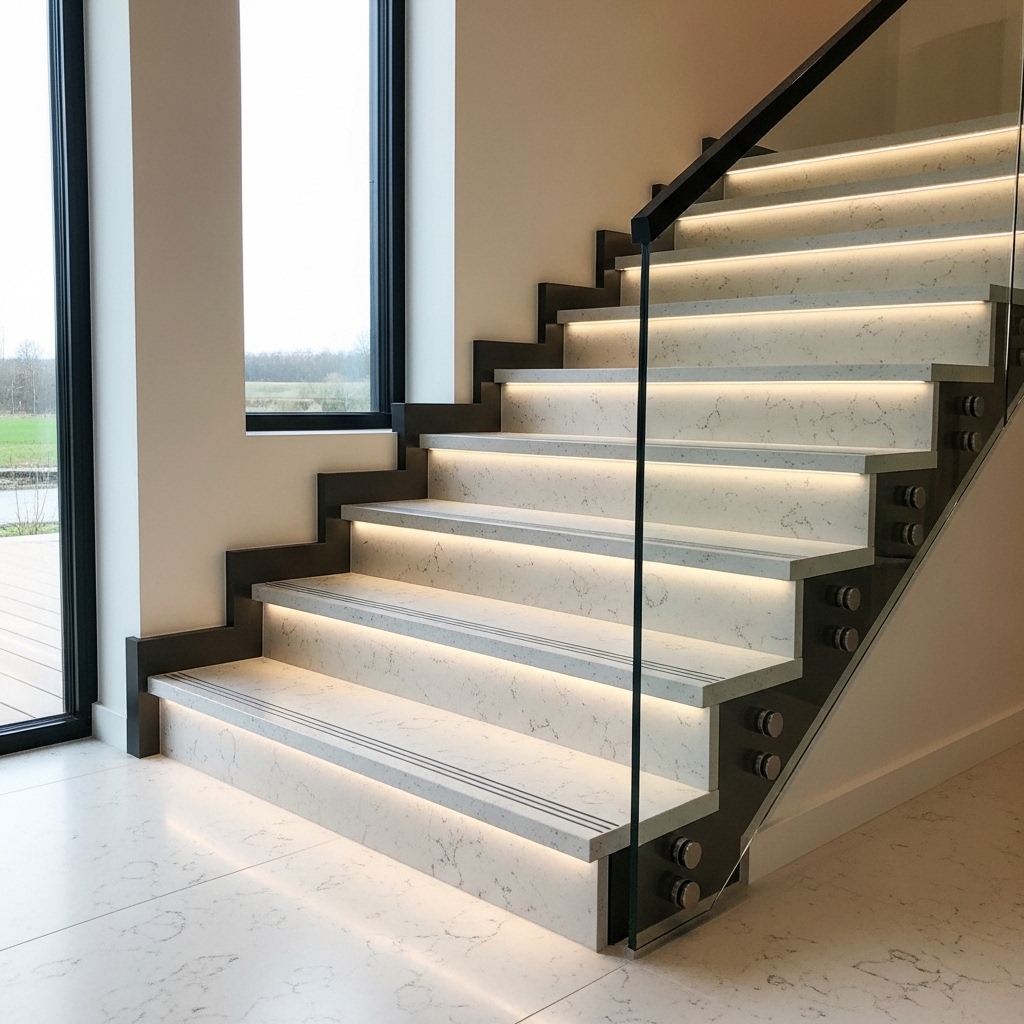
Quartz slab measurement guide for stairs
A quartz slab measurement guide for stairs begins by measuring each step precisely—tread depth, riser height, flight width, and landing sizes—then converting those dimensions into a cutting layout that minimizes seams and keeps pattern direction consistent.
Quartz slabs commonly come in large formats like 3000 × 1400 mm or 3200 × 1600 mm, which helps produce multiple stair components from one batch and maintain consistent color across the flight.
For durability on stairs, many projects choose 20 mm thickness for treads, and then specify edge detailing (eased, chamfered, bullnose) based on style and traffic level; a small chamfer is often used to reduce chipping risk at the nose.
As an example, a flight can be planned so tread pieces are cut in the same orientation, while risers are cut from calmer pattern areas to keep the vertical faces visually clean.
Good measurement planning also considers anti-slip preferences (matte/honed finishes, textured strips), tolerances at wall skirting, and consistent joint lines so the staircase looks crisp and professionally finished.
In the UAE, the size of quartz slab you’ll find in stock usually ranges from standard 3040 × 1440 mm up to jumbo 3200 × 1600 mm, with 20 mm being the most common thickness and 30 mm available for bolder edge profiles. This size range is ideal for many Dubai and Abu Dhabi kitchens because it can cover long counter runs and wide islands with fewer joins, especially when the layout is optimized for 600–650 mm depths. If your design needs a single-piece island top or wide waterfall panels, check availability of the largest quartz slab size options, which can reach roughly 3340 × 1640 mm in select premium lines.
Size of Quartz Slab Planning with Current Tile Fixing Rates in Dubai
Size of quartz slab planning with current tile fixing rates in Dubai requires balancing slab dimensions with installation efficiency and overall project cost. Standard quartz slabs around 3040 × 1440 mm and jumbo slabs up to 3200 × 1600 mm can significantly reduce the number of joints, which in turn lowers labor time during installation. Since tile fixing rates in dubai are often calculated per square meter, using larger slabs can help optimize budgets by minimizing cuts, alignment work, and finishing effort.
Size of Quartz Slab Requirements for Raised Floor Installations
Understanding the size of quartz slab requirements is essential when specifying finishes above a raised floor installation. For efficient planning, designers usually work with slab sizes between 3000–3200 mm in length and 1400–1600 mm in width. This range allows accurate cutting for counters, islands, and service edges while ensuring compatibility with the subfloor grid and maintaining uniform load distribution.