
Standard Slab Size
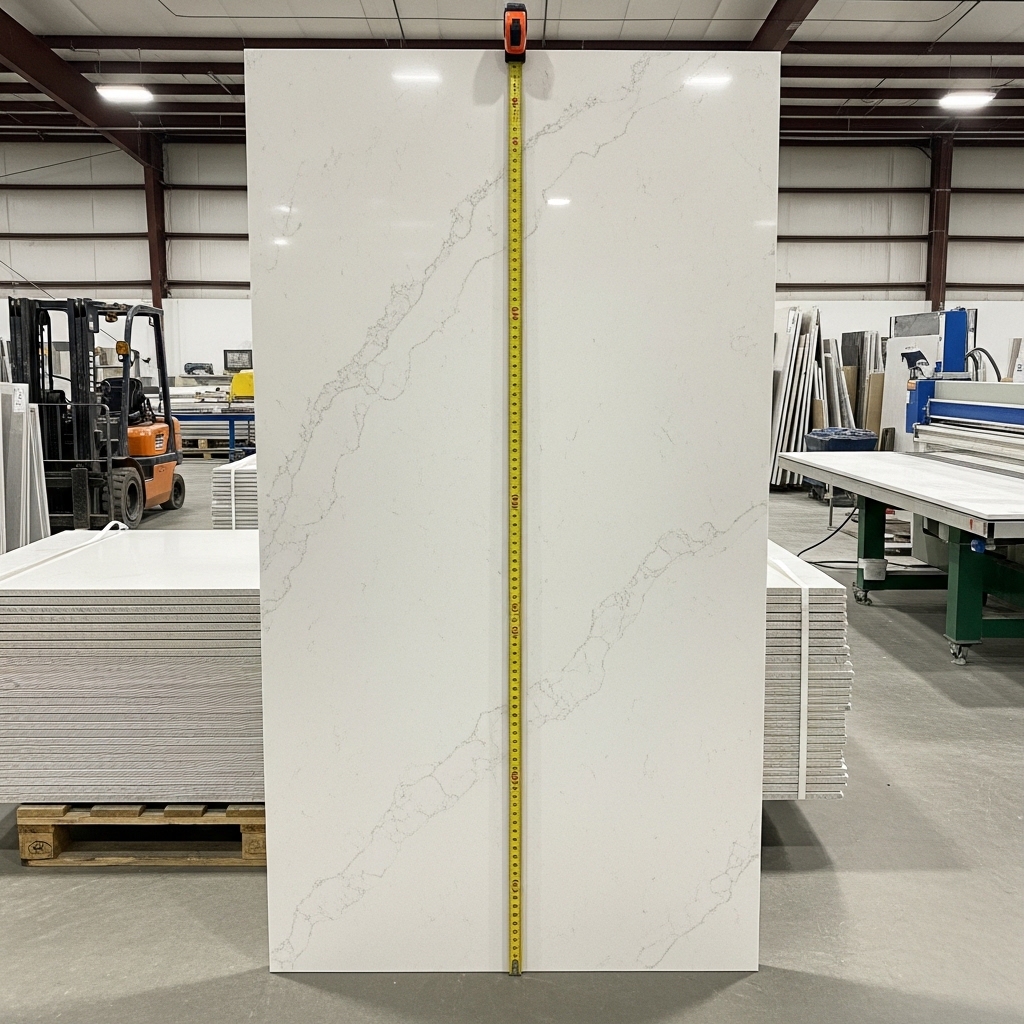
Standard slab size (general countertop slabs) depends on the material, but the most commonly referenced “standard” engineered-stone slab is 56 in × 120 in (142.24 cm × 304.80 cm), while many natural-stone slabs (granite, marble, quartzite) are often supplied around 108–120 in long × 60–72 in wide (274.32–304.80 cm × 152.40–182.88 cm), with some shipments going wider up to about 78 in (198.12 cm). Smaller half-slabs are also common around 96 in × 48 in (243.84 cm × 121.92 cm) for certain projects. Across most slab materials, typical thicknesses are 2 cm (0.79 in / 20 mm) and 3 cm (1.18 in / 30 mm), with 1.5 cm (0.59 in / 15 mm) sometimes used for wall cladding or lighter-duty designs.
Regular Size
56 in × 120 in (engineered) or about 120 in × 72 in (natural stone), thickness 0.79 in (2 cm) or 1.18 in (3 cm).
Jumbo Size
63 in × 126 in (engineered jumbo) or 126 in × 78 in (natural-stone jumbo), thickness 0.79 in (2 cm) or 1.18 in (3 cm).
Super Size
78 in × 138 in (engineered super) or 138 in × 78 in (natural-stone super), thickness 0.79 in (2 cm) or 1.18 in (3 cm).
Super Jumbo
137.80 in × 78.74 in (engineered super jumbo) or 138 in × 78 in (natural-stone super), thickness 0.79 in (2 cm) or 1.18 in (3 cm).
Mini Slab
48 in × 96 in (mini slab) or 96 in × 48 in (mini stone), thickness 0.79 in (2 cm) or 1.18 in (3 cm).
Choosing Standard Slab Dimensions
Choosing standard slab dimensions is a critical decision that hinges on various factors, including project dimensions, desired aesthetic, budget constraints, fabricator’s expertise, and specific design requirements.
First, the project dimensions play a pivotal role; for instance, if the area to be covered is 200 square feet, selecting slabs that are 2 feet by 4 feet can minimize the number of joints and enhance the overall appearance.
The desired aesthetic also influences slab selection; larger slabs, such as 3 feet by 6 feet, can create a seamless look, while smaller tiles may be preferred for intricate patterns.
Budget constraints cannot be overlooked; standard slabs typically range from $5 to $15 per square foot, and opting for sizes that reduce waste can lead to significant savings.
Additionally, the fabricator’s expertise should guide the choice of dimensions; if the fabricator specializes in large-format tiles, it may be beneficial to choose dimensions that align with their capabilities to ensure quality installation.
Lastly, specific design requirements, such as the need for slip resistance in wet areas, may dictate the choice of slab dimensions and materials, ensuring that the final product meets both functional and aesthetic goals.
Standard Slab Measurements: Why Upsizing Helps
Choosing standard slab dimensions offers numerous advantages that can significantly enhance construction efficiency and cost-effectiveness.
Firstly, using standard measurements simplifies the design and planning process, as architects and engineers can easily reference established dimensions, reducing the likelihood of errors.
For instance, opting for a standard slab size of 4 feet by 8 feet allows for easier calculations and material estimations, streamlining the workflow.
Additionally, standard dimensions facilitate bulk purchasing of materials, leading to potential cost savings. When contractors order materials in standard sizes, suppliers often provide discounts for larger quantities, which can lower overall project costs.
Upsizing slabs, such as moving from a 4-inch thickness to a 6-inch thickness, can also enhance structural integrity, allowing for greater load-bearing capacity and durability.
This is particularly beneficial in commercial buildings where heavy equipment or high foot traffic is expected.
Furthermore, standard dimensions promote consistency across projects, making it easier for teams to collaborate and share resources.
Overall, the strategic choice of standard slab dimensions not only optimizes construction processes but also contributes to long-term sustainability and performance of the structures built.
General Waste Allowance for Standard Slabs
The General Waste Allowance for Standard Slabs is a crucial aspect of construction and waste management, ensuring that projects remain within budget and adhere to environmental regulations. Typically, the waste allowance is calculated as a percentage of the total material quantity, often ranging from 5% to 10% depending on the type of material and the specific project requirements. For instance, if a project requires 100 cubic meters of concrete for standard slabs, a 10% waste allowance would mean an additional 10 cubic meters should be accounted for, bringing the total to 110 cubic meters. This allowance helps to cover losses due to cutting, breakage, or other unforeseen circumstances during the construction process.
Properly managing this waste allowance not only minimizes costs but also promotes sustainability by reducing the amount of material that ends up in landfills. It is essential for project managers to accurately estimate the waste allowance and communicate it effectively to all stakeholders involved, ensuring that everyone is aligned on expectations and resource allocation.
By adhering to these guidelines, construction teams can optimize their material usage, enhance project efficiency, and contribute to a more sustainable building practice.
Standard Slab Material: Largest Format Options
Standard slab materials have evolved significantly, with the largest format options gaining immense popularity in both residential and commercial applications. These large-format slabs, often exceeding dimensions of 3×1.5 meters, offer a seamless aesthetic that is highly sought after in modern design. One of the primary advantages of using large-format slabs is the reduction in grout lines, which not only enhances the visual appeal but also simplifies maintenance. With fewer joints, there is less opportunity for dirt and grime to accumulate, making these surfaces easier to clean and maintain over time. Moreover, the durability of standard slab materials, such as porcelain and natural stone, is a crucial factor in their selection. Porcelain slabs, for instance, are known for their resistance to scratches, stains, and moisture, making them ideal for high-traffic areas. These materials can withstand heavy loads and are suitable for both indoor and outdoor applications, providing versatility in design. The thickness of these slabs typically ranges from 6mm to 20mm, allowing for various installation methods, including direct bonding to substrates or over existing surfaces. In terms of design options, large-format slabs come in a myriad of colors, textures, and finishes, enabling architects and designers to create unique and personalized spaces. For example, a large-format marble-look porcelain slab can mimic the elegance of natural stone without the associated maintenance issues, offering a cost-effective solution for luxury aesthetics. Additionally, the ability to cut these slabs into smaller pieces allows for creative layouts and patterns, further enhancing their appeal in contemporary design. The installation of large-format slabs requires skilled labor and precise techniques to ensure a flawless finish. Proper handling and transportation are also critical, as these slabs can be heavy and cumbersome. Specialized tools and equipment are often necessary to manage the weight and size, ensuring that the installation process is efficient and safe. As the demand for large-format options continues to grow, manufacturers are innovating to produce even larger and thinner slabs, pushing the boundaries of what is possible in slab material design. In conclusion, the largest format options in standard slab materials offer a combination of aesthetic appeal, durability, and versatility that meets the needs of modern architecture and design. With their ability to create seamless surfaces and withstand the rigors of daily use, these slabs are becoming a preferred choice for many projects, transforming spaces into stunning visual experiences.
Standard Slab Materials: Best Thickness for Busy Areas
When selecting standard slab materials for busy areas, the thickness of the slabs plays a crucial role in ensuring durability and longevity. Typically, a thickness of 4 to 6 inches is recommended for high-traffic zones, such as commercial spaces, parking lots, and walkways. This thickness provides adequate support to withstand the weight of vehicles and heavy foot traffic, minimizing the risk of cracking and structural failure.
In addition to thickness, the choice of material also significantly impacts the performance of the slabs. Concrete is the most common material used due to its strength and versatility. For instance, reinforced concrete slabs, which incorporate steel bars or mesh, can enhance load-bearing capacity and reduce the likelihood of damage in busy areas.
Moreover, the use of additives and sealants can further improve the durability of concrete slabs. For example, incorporating fiber reinforcement can help distribute loads more evenly, while sealants can protect against moisture infiltration and freeze-thaw cycles.
In some cases, thicker slabs, ranging from 6 to 8 inches, may be necessary for exceptionally heavy loads, such as in industrial settings or areas where heavy machinery operates. These thicker slabs provide additional strength and stability, ensuring that they can endure the stresses imposed by constant use.
Ultimately, the best thickness for standard slab materials in busy areas will depend on various factors, including the expected load, environmental conditions, and the specific use of the space. Consulting with a structural engineer can help determine the most appropriate thickness and material combination to ensure safety and longevity in high-traffic environments.
Standard slab measurement guide for walls & decorative surfaces
A standard slab measurement guide for walls helps designers choose practical slab formats that are widely available and easy to fabricate into clean, repeatable wall panels.
Standard slabs are often large enough to reduce joints while still being manageable for typical site access and installation workflows.
As an example planning method, a slab can be cut into large wall modules that align with architectural lines—like cabinet edges, niches, or door returns—so seams look intentional.
Thickness selection is commonly matched to vertical performance needs, often using lighter wall-friendly options where available and reserving thicker material for exposed edges or heavy detailing.
A good standard plan also includes consistent joint widths and clean edge finishing so the finished decorative wall looks aligned and premium.
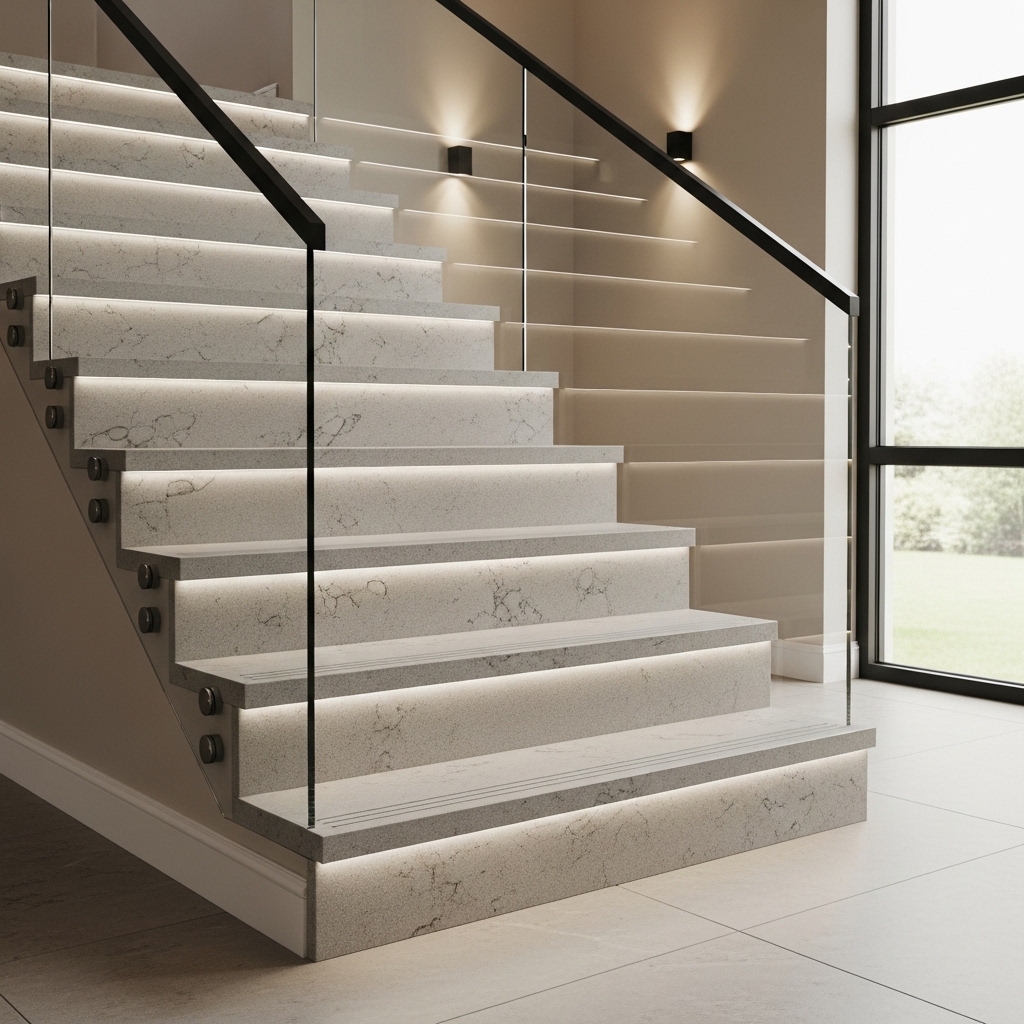
Standard slab measurement guide for stairs
A standard slab measurement guide for stairs explains how commonly available slab formats are converted into repeated tread and riser components with controlled seams and consistent pattern direction.
Start by measuring step geometry and then decide which surfaces must look continuous—usually the landing and the main tread faces—so joints can be pushed to edges or skirting lines.
Standard slab examples like 3000 × 1400 mm and 3200 × 1600 mm provide enough area for multiple tread cuts, and using one batch helps maintain shade consistency across the flight.
For example, a 3200 × 1600 mm slab (~5.12 m²) can be mapped to produce repeated treads while reserving a larger portion for the landing piece if needed.
Finish the guide by specifying tread thickness (often 20 mm), nose detailing, and uniform joint gaps so the staircase installs cleanly and looks professionally aligned.
Across the UAE stone industry, standard slab size generally refers to the most commonly stocked dimensions that balance coverage, handling, and cost efficiency, such as slabs around 3000–3200 mm long and 1400–1600 mm wide. These sizes form the baseline for estimating seams and material yield in kitchens and bathrooms. When working with engineered stone, this is often cross-checked against the size of quartz countertop slabs offered by specific brands.
Standard Slab Size for Armani Gray Marble Kitchen Designs
Standard slab size for Armani Gray marble kitchen designs usually centers around slabs measuring about 3040 × 1440 mm, with jumbo options available for larger layouts. These sizes support long counter runs and wide islands while keeping seam placement discreet. Incorporating armani gray marble aesthetics into kitchens benefits from careful slab planning to preserve its elegant veining and balanced grey tones.
Standard Slab Size Guidelines for Raised Floor Systems
Standard slab size guidelines help ensure consistency when finishes are installed with a raised floor system. Designers typically work with slab lengths between 3000 and 3200 mm to match modular floor grids and reduce cutting waste. Following standard sizes allows smoother installation, accurate level control, and long-term performance.